Buy pernitz.co.at ?
We are moving the project
pernitz.co.at .
Are you interested in purchasing the domain
pernitz.co.at ?
domain@kv-gmbh.de · 0541-91531010
Buy pernitz.co.at ?
How do you cultivate Sphagnum?
To cultivate Sphagnum, you can start by collecting live Sphagnum moss from a natural habitat or purchasing it from a nursery. Then, you can propagate the moss by dividing it into smaller pieces and placing them in a shallow tray filled with distilled water or rainwater. Make sure to keep the tray in a humid environment with indirect sunlight. Regularly mist the moss to keep it moist and provide it with nutrients by occasionally adding a diluted fertilizer solution. With proper care and maintenance, the Sphagnum moss should continue to grow and spread. **
How do you cultivate basil?
To cultivate basil, start by choosing a sunny location with well-drained soil. Plant the basil seeds or seedlings in the spring after the last frost. Water the basil regularly, keeping the soil consistently moist but not waterlogged. Pinch off the flowers as they appear to encourage leaf growth and prevent the plant from going to seed too soon. Harvest the basil leaves regularly to promote new growth and keep the plant healthy. **


Similar search terms for Cultivate
Top-Angebote
Products related to Cultivate:
-
A-Street Prints Cultivate Pastel Springtime Blooms WallpaperReinvigorate your interiors with this cheerful and feminine floral wallpaper. A medley of springtime blooms are painted in pink, tangerine, periwinkle, sage, and white along a soft grey backdrop.97,99 $*Shipping: 0,00 $Secure redirect to the provider
-
Pops & Bejou Games Strategic Board Game - CULTivate - Multiplayer Persuasion & PlanningA strategic board game for players who enjoy persuasion, planning and interaction. Each recruit brings a distinctive skill to your compound, helping your cult develop powers and pursue its agenda. Choose your followers carefully, manage your growing influence, and adapt as rival leaders attempt to disrupt your plans. Not every challenge comes from across the table. Followers may be difficult to control, while undercover investigations can create unexpected pressure. Use negotiation, clever tactics, and timely decisions to protect your position and outmaneuver your opponents. The game combines tactical decision-making with direct player interaction for a competitive and engaging experience.31,99 £*Shipping: 3,95 £Secure redirect to the provider
-
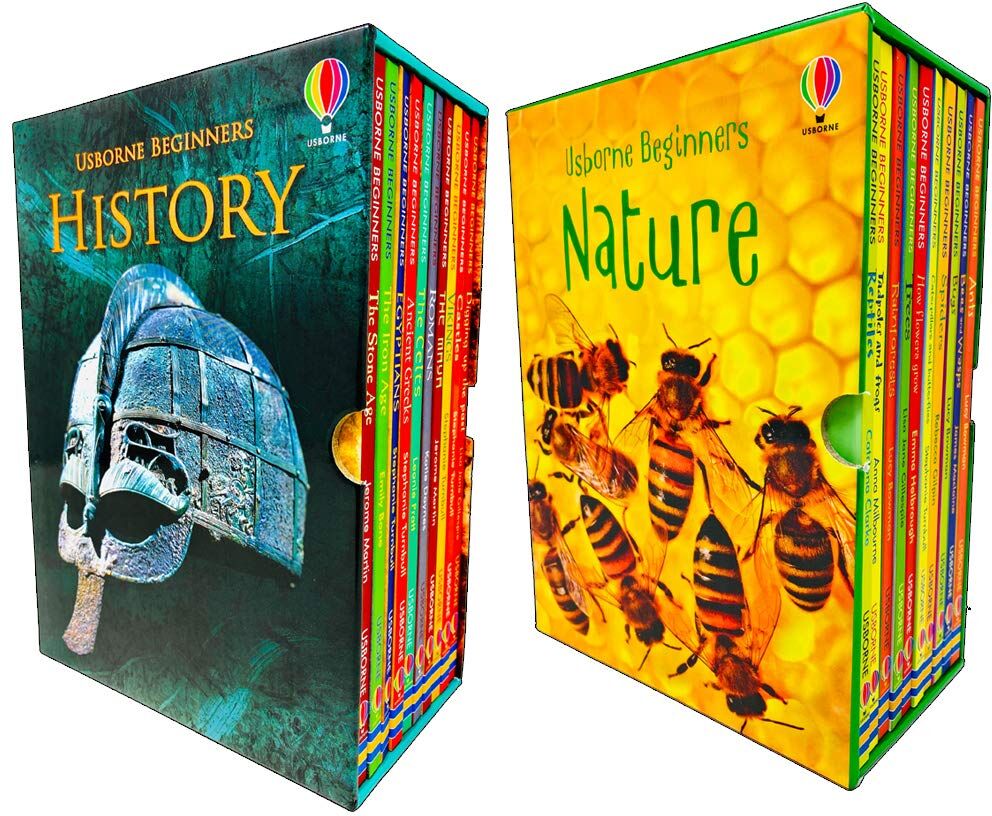
Usborne Publishing Ltd Usborne Beginners History & Usborne Beginners Nature 20 Books Collection Box SetTitles in this set: Usborne Beginners History Stone Age Iron Age Egyptians Ancient Greeks Celts Romans The Maya Vikings Castles Digging Up the Past. Usborne Beginners Nature Reptiles Tadpoles and Frogs Rainforest Trees How Flowers Grow Caterpillars and Butterflies Spiders Bugs Bees & Wasps Ants Description Stone Age This simple information book follows the history of Stone Age people and how they lived. Iron Age This simple information book charts the history of Iron Age people and how they lived, including their farming methods, the gods they prayed to and the hill forts where they lived. Egyptians Who were the ancient Egyptians? Why did they build pyramids and how were mummies made? Ancient Greeks Find out about Ancient Greece, what people wore, ate and did for fun and learn about some of the most famous philosophers and mathematicians of the age in this compelling book for beginner readers. Celts Who were the Celts exactly? Did you know they lived on top of hills? Do you have any idea how Celtic warriors made themselves look really scary in battle? Romans Who were the ancient Romans? Where did they go to eat, shop and wash? What did they do for fun? The Maya Who were the Maya? Where did they live? Why did they build tall stone temples? Vikings Find out what it was like to be a Viking, and learn about Viking homes, feasts, boats, gods and much more in this fascinating book. Castles Who lived in a castle, and what was it like? Children can find out the answers to these questions and lots more about the wonderful world of castles in this informative book. Digging Up the Past How do ancient things get buried? Who digs them up? And what do they find? Beginner readers can find answers to these questions and more in this colourful information book. Reptiles This is a fantastic brand new addition to the "Beginners" series, designed to provide an informative introduction to trees and plant-life for young readers. Tadpoles and Frogs Vivid, full colour illustrations and photographs on every page, accompanied by short, informative text. Rainforest It offers a terrific reading practice for children who prefer fact to fiction. It is developed with a reading expert from Roehampton University to help young readers grow in confidence. Trees This is a fantastic brand new addition to the 'Beginners' series, designed to provide an informative introduction to trees and plant-life for young readers. How Flowers Grow How do flowers grow in dry deserts? How do animals help to spread seeds? Which flower smells like rottng meat? Caterpillars and Butterflies Usborne Beginners are colourful information books for children beginning to read on their own. Spiders Usborne Beginners are colourful information books for children beginning to read on their own. Bugs Usborne Beginners are colourful information books for children beginning to read on their own. Bees & Wasps A slim and unintimidating book which belies its contents - a wealth of information, much of which will be...34,99 £*Shipping: 2,99 £Secure redirect to the provider
-
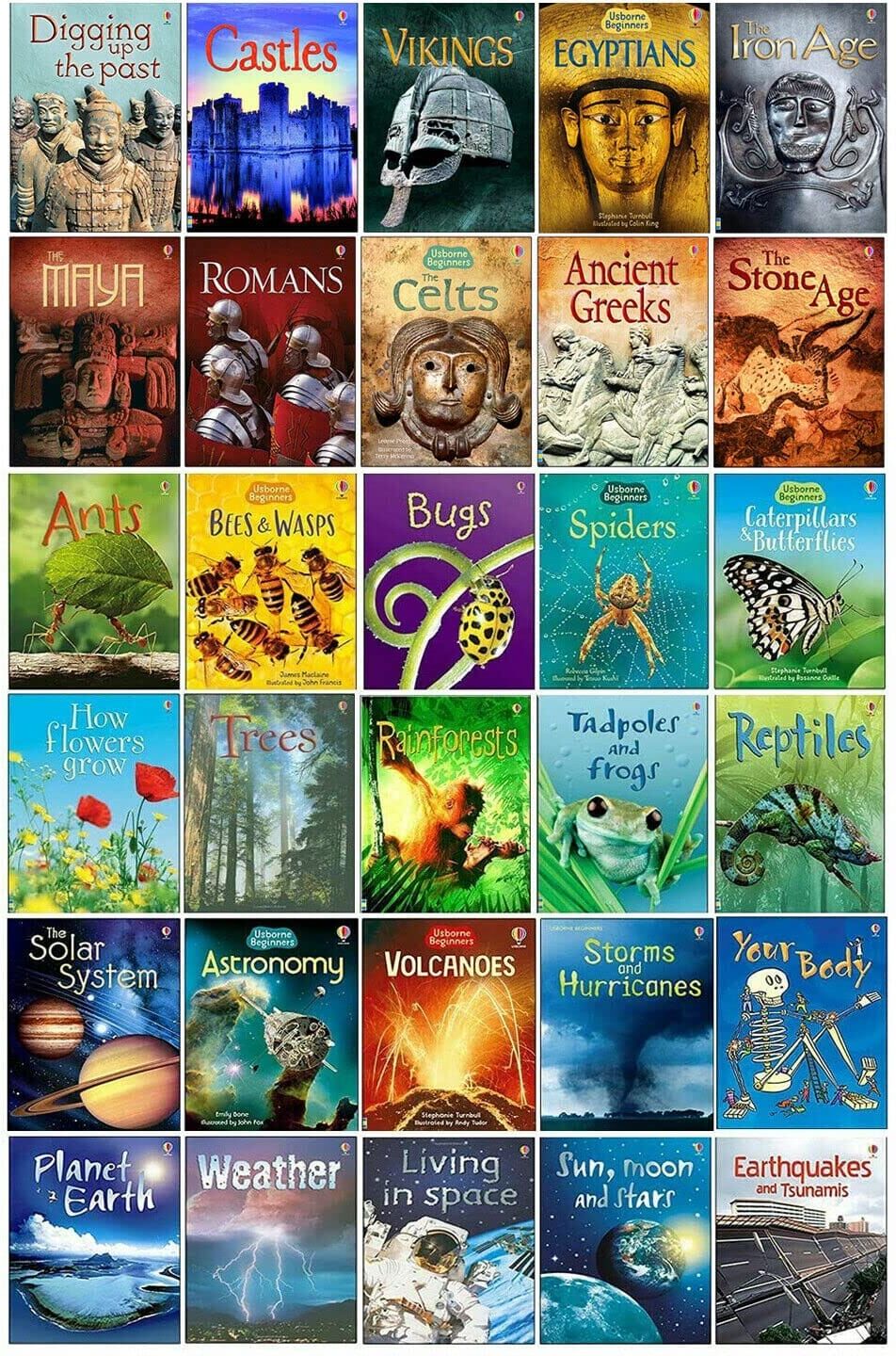
Usborne Beginners Series – 30 Book Collection Box Set Children’s Educational Books (History, Nature & Science) KS1 KS2Usborne Beginners Series 30 Books Collection Box Set (History- Nature- Science) Build a strong foundation in knowledge and reading with the Usborne Beginners Series – 30 Books Collection Box Set, published by Usborne. This comprehensive educational collection introduces children to a wide range of topics across history, science, and nature, using clear language, engaging illustrations, and structured layouts designed for young learners. Perfectly suited for KS1 and KS2 pupils, these books support both curriculum learning and independent reading. From natural disasters and wildlife to historical events and scientific discoveries, the series encourages curiosity, critical thinking, and a love of learning. Description Titles in this set: History Stone Age Iron Age Egyptians Ancient Greeks Celts Romans The Maya Vikings Castles Digging Up the Past Nature Reptiles Tadpoles and Frogs Rainforest Trees How Flowers Grow Caterpillars and Butterflies Spiders Bugs Bees & Wasps Ants Science Earthquakes & Tsunamis Sun Moon and Stars Living in Space Storms and Hurricanes Volcanoes Astronomy The Solar System Your Body Planet Earth Weather Related Tags: Usborne, Usbourne42,75 £*Shipping: 0,00 £Secure redirect to the provider



-
How do you cultivate bacteria?
To cultivate bacteria, you can start by preparing a growth medium, which can be agar plates or liquid broth. Then, you can inoculate the medium with a sample containing the bacteria you want to grow, such as a swab from a surface or a sample from a culture. After inoculation, the plates or broth can be incubated at the optimal temperature for the bacteria to grow. Over time, the bacteria will multiply and form visible colonies on the agar plates or cause the liquid broth to become cloudy. **
-
How do you cultivate oleander?
Oleander can be cultivated by planting it in well-drained soil and a location that receives full sunlight. It is important to water the plant regularly, especially during dry periods, but be careful not to overwater as oleander is drought-tolerant. Pruning oleander in the spring can help promote new growth and maintain its shape. Additionally, fertilizing the plant with a balanced fertilizer in the spring and summer can help promote healthy growth and flowering. It is important to note that all parts of the oleander plant are toxic if ingested, so caution should be taken when cultivating and handling it. **
-
Can you cultivate a pimple?
No, you cannot cultivate a pimple. Pimples are caused by a combination of excess oil, bacteria, and dead skin cells clogging the pores. While you can take steps to prevent pimples, such as keeping your skin clean and using non-comedogenic products, you cannot intentionally cultivate a pimple. Trying to do so could actually harm your skin and lead to more breakouts. **
-
How do you cultivate yeast?
To cultivate yeast, you can start by creating a mixture of warm water, sugar, and flour to create a feeding ground for the yeast. Once the mixture is ready, you can add a small amount of commercial yeast or use natural sources of yeast, such as fruit or grains, to introduce the yeast culture. Then, you can let the mixture sit in a warm, dark place to allow the yeast to grow and multiply. Regular feeding and maintenance of the yeast culture will help it thrive and be ready for use in baking or brewing. **
How do you cultivate sunflowers?
To cultivate sunflowers, start by choosing a sunny location with well-drained soil. Plant the sunflower seeds directly into the ground after the last frost, spacing them about 6 inches apart. Water the seeds regularly, keeping the soil consistently moist but not waterlogged. As the sunflowers grow, provide support for the tall stems if needed. Additionally, consider fertilizing the soil with a balanced fertilizer to promote healthy growth. Finally, enjoy watching the sunflowers bloom and provide a beautiful addition to your garden. **
How do you cultivate melons?
To cultivate melons, start by preparing well-drained soil with plenty of organic matter. Plant melon seeds or seedlings in a sunny location with plenty of space for the vines to spread out. Water the plants regularly, keeping the soil consistently moist but not waterlogged. Fertilize the plants with a balanced fertilizer throughout the growing season. As the melons start to develop, place a straw or cardboard under each fruit to prevent rot and keep them off the ground. Harvest the melons when they are fully ripe and have a sweet aroma. **
Top-Angebote
Products related to Cultivate:
-
A-Street Prints Cultivate Navy Springtime Blooms WallpaperThis painterly floral wallpaper is a playful interior accent. Blooms of all shapes, sizes, and color sprout up along a rich navy backdrop that heightens the blossom's watercolor hues.97,99 $*Shipping: 0,00 $Secure redirect to the provider
-
A-Street Prints Cultivate Blue Springtime Blooms WallpaperThis charming floral wallpaper is a contemporary take on blue and white timelessness. Spring's first blooms are painted in a variety of blues accented by white and framed by a pale grey backdrop.97,99 $*Shipping: 0,00 $Secure redirect to the provider
-
A-Street Prints Cultivate Pastel Springtime Blooms WallpaperReinvigorate your interiors with this cheerful and feminine floral wallpaper. A medley of springtime blooms are painted in pink, tangerine, periwinkle, sage, and white along a soft grey backdrop.97,99 $*Shipping: 0,00 $Secure redirect to the provider
-
Pops & Bejou Games Strategic Board Game - CULTivate - Multiplayer Persuasion & PlanningA strategic board game for players who enjoy persuasion, planning and interaction. Each recruit brings a distinctive skill to your compound, helping your cult develop powers and pursue its agenda. Choose your followers carefully, manage your growing influence, and adapt as rival leaders attempt to disrupt your plans. Not every challenge comes from across the table. Followers may be difficult to control, while undercover investigations can create unexpected pressure. Use negotiation, clever tactics, and timely decisions to protect your position and outmaneuver your opponents. The game combines tactical decision-making with direct player interaction for a competitive and engaging experience.31,99 £*Shipping: 3,95 £Secure redirect to the provider
-
How do you cultivate Sphagnum?
To cultivate Sphagnum, you can start by collecting live Sphagnum moss from a natural habitat or purchasing it from a nursery. Then, you can propagate the moss by dividing it into smaller pieces and placing them in a shallow tray filled with distilled water or rainwater. Make sure to keep the tray in a humid environment with indirect sunlight. Regularly mist the moss to keep it moist and provide it with nutrients by occasionally adding a diluted fertilizer solution. With proper care and maintenance, the Sphagnum moss should continue to grow and spread. **
-
How do you cultivate basil?
To cultivate basil, start by choosing a sunny location with well-drained soil. Plant the basil seeds or seedlings in the spring after the last frost. Water the basil regularly, keeping the soil consistently moist but not waterlogged. Pinch off the flowers as they appear to encourage leaf growth and prevent the plant from going to seed too soon. Harvest the basil leaves regularly to promote new growth and keep the plant healthy. **
-
How do you cultivate bacteria?
To cultivate bacteria, you can start by preparing a growth medium, which can be agar plates or liquid broth. Then, you can inoculate the medium with a sample containing the bacteria you want to grow, such as a swab from a surface or a sample from a culture. After inoculation, the plates or broth can be incubated at the optimal temperature for the bacteria to grow. Over time, the bacteria will multiply and form visible colonies on the agar plates or cause the liquid broth to become cloudy. **
-
How do you cultivate oleander?
Oleander can be cultivated by planting it in well-drained soil and a location that receives full sunlight. It is important to water the plant regularly, especially during dry periods, but be careful not to overwater as oleander is drought-tolerant. Pruning oleander in the spring can help promote new growth and maintain its shape. Additionally, fertilizing the plant with a balanced fertilizer in the spring and summer can help promote healthy growth and flowering. It is important to note that all parts of the oleander plant are toxic if ingested, so caution should be taken when cultivating and handling it. **
Similar search terms for Cultivate
-
Usborne Publishing Ltd Usborne Beginners History & Usborne Beginners Nature 20 Books Collection Box SetTitles in this set: Usborne Beginners History Stone Age Iron Age Egyptians Ancient Greeks Celts Romans The Maya Vikings Castles Digging Up the Past. Usborne Beginners Nature Reptiles Tadpoles and Frogs Rainforest Trees How Flowers Grow Caterpillars and Butterflies Spiders Bugs Bees & Wasps Ants Description Stone Age This simple information book follows the history of Stone Age people and how they lived. Iron Age This simple information book charts the history of Iron Age people and how they lived, including their farming methods, the gods they prayed to and the hill forts where they lived. Egyptians Who were the ancient Egyptians? Why did they build pyramids and how were mummies made? Ancient Greeks Find out about Ancient Greece, what people wore, ate and did for fun and learn about some of the most famous philosophers and mathematicians of the age in this compelling book for beginner readers. Celts Who were the Celts exactly? Did you know they lived on top of hills? Do you have any idea how Celtic warriors made themselves look really scary in battle? Romans Who were the ancient Romans? Where did they go to eat, shop and wash? What did they do for fun? The Maya Who were the Maya? Where did they live? Why did they build tall stone temples? Vikings Find out what it was like to be a Viking, and learn about Viking homes, feasts, boats, gods and much more in this fascinating book. Castles Who lived in a castle, and what was it like? Children can find out the answers to these questions and lots more about the wonderful world of castles in this informative book. Digging Up the Past How do ancient things get buried? Who digs them up? And what do they find? Beginner readers can find answers to these questions and more in this colourful information book. Reptiles This is a fantastic brand new addition to the "Beginners" series, designed to provide an informative introduction to trees and plant-life for young readers. Tadpoles and Frogs Vivid, full colour illustrations and photographs on every page, accompanied by short, informative text. Rainforest It offers a terrific reading practice for children who prefer fact to fiction. It is developed with a reading expert from Roehampton University to help young readers grow in confidence. Trees This is a fantastic brand new addition to the 'Beginners' series, designed to provide an informative introduction to trees and plant-life for young readers. How Flowers Grow How do flowers grow in dry deserts? How do animals help to spread seeds? Which flower smells like rottng meat? Caterpillars and Butterflies Usborne Beginners are colourful information books for children beginning to read on their own. Spiders Usborne Beginners are colourful information books for children beginning to read on their own. Bugs Usborne Beginners are colourful information books for children beginning to read on their own. Bees & Wasps A slim and unintimidating book which belies its contents - a wealth of information, much of which will be...34,99 £*Shipping: 2,99 £Secure redirect to the provider
-
Usborne Beginners Series – 30 Book Collection Box Set Children’s Educational Books (History, Nature & Science) KS1 KS2Usborne Beginners Series 30 Books Collection Box Set (History- Nature- Science) Build a strong foundation in knowledge and reading with the Usborne Beginners Series – 30 Books Collection Box Set, published by Usborne. This comprehensive educational collection introduces children to a wide range of topics across history, science, and nature, using clear language, engaging illustrations, and structured layouts designed for young learners. Perfectly suited for KS1 and KS2 pupils, these books support both curriculum learning and independent reading. From natural disasters and wildlife to historical events and scientific discoveries, the series encourages curiosity, critical thinking, and a love of learning. Description Titles in this set: History Stone Age Iron Age Egyptians Ancient Greeks Celts Romans The Maya Vikings Castles Digging Up the Past Nature Reptiles Tadpoles and Frogs Rainforest Trees How Flowers Grow Caterpillars and Butterflies Spiders Bugs Bees & Wasps Ants Science Earthquakes & Tsunamis Sun Moon and Stars Living in Space Storms and Hurricanes Volcanoes Astronomy The Solar System Your Body Planet Earth Weather Related Tags: Usborne, Usbourne42,75 £*Shipping: 0,00 £Secure redirect to the provider
-
Usborne Beginners Nature, Science & History Collection 30 Books Set - Ages 4-10 - Paperback Usborne Publishing LtdTitles in This Set: Usborne Beginners Nature 10 Books: 1. Ants 2. Bees & Wasps 3. Bugs 4. Spiders 5. Tadpoles and Frogs 6. Caterpillars and Butterflies 7. How Flowers Grow 8. Trees 9. Rainforest 10. Reptiles Usborne Beginners Science 10 Books: 1. Earthquakes & Tsunamis 2. Sun Moon and Stars 3. Living in Space 4. Storms and Hurricanes 5. Volcanoes 6. Astronomy 7. The Solar System 8. Your Body 9. Planet Earth 10. Weather Usborne Beginners History 10 Books: Titles in This Set: 1. Ancient Greeks 2. Castles 3. Celts 4. Digging Up the Past 5. Egyptians 6. Iron Age 7. Maya 8. Romans 9. Stone Age 10. Vikings Description : Usborne Beginners Nature 10 Books Ants Where do ants live? What do they eat? How much weight can they carry? Little children can find out the answers to these questions and much more in this simple introduction to the world of ants. Bees & Wasps What do bees and wasps eat? What type of nests do they make? How do bees make honey? Find out the answers and lots more in this intriguing introduction to the fascinating world of bees and wasps. Bugs ''There are all kinds of different bugs. Some can jump up high. Other bugs have lots of legs.” Bugs is part of an exciting reading series for young children, with lots of pictures and very simple text. Spiders “Spiders have eight legs. Most of them have eight eyes, but some of them can’t see very well.” Learn all about spiders in this great book for children learning to read by themselves. Tadpoles and Frogs From egg to frog, find out about the entire life cycle of a frog in this easy-to-read fully illustrated book for young learners ages 4+. It comes complete with weblinks so you can see the process for yourself. Caterpillars and Butterflies A beautifully illustrated introduction to the life of butterflies and caterpillars, with easy to read text for beginner readers. The life cycle of a butterfly is shown with stunning photographs and illustrations, and there are links to carefully selected websites with videos that show butterflies emerging from their pupae. How Flowers Grow How do flowers grow in dry deserts? How do animals help to spread seeds? Which flower smells like rotting meat? Find out in this great book for young readers ages four and up. Trees How do trees use their leaves to make food? Why do they grow flowers and fruit? Which animals live inside a tree trunk and build nests in its branches? How can we help to protect trees? This book has all the answers and much more, along with photographs, step-by-step illustrations, simple text and links to websites with video clips and activities. Rainforests Learn all about the rainforest in this fantastic easy-to-read book for children 4+ beginning to strike out on their own. From towering trees to rainforest rivers, this fully-illustrated book also features links to carefully selected websites. Reptiles Learn all about the lizard world in this fully-illustrated guide, the latest in the Usborne Beginners series. From scaly skin to tongue tricks...42,75 £*Shipping: 0,00 £Secure redirect to the provider
-
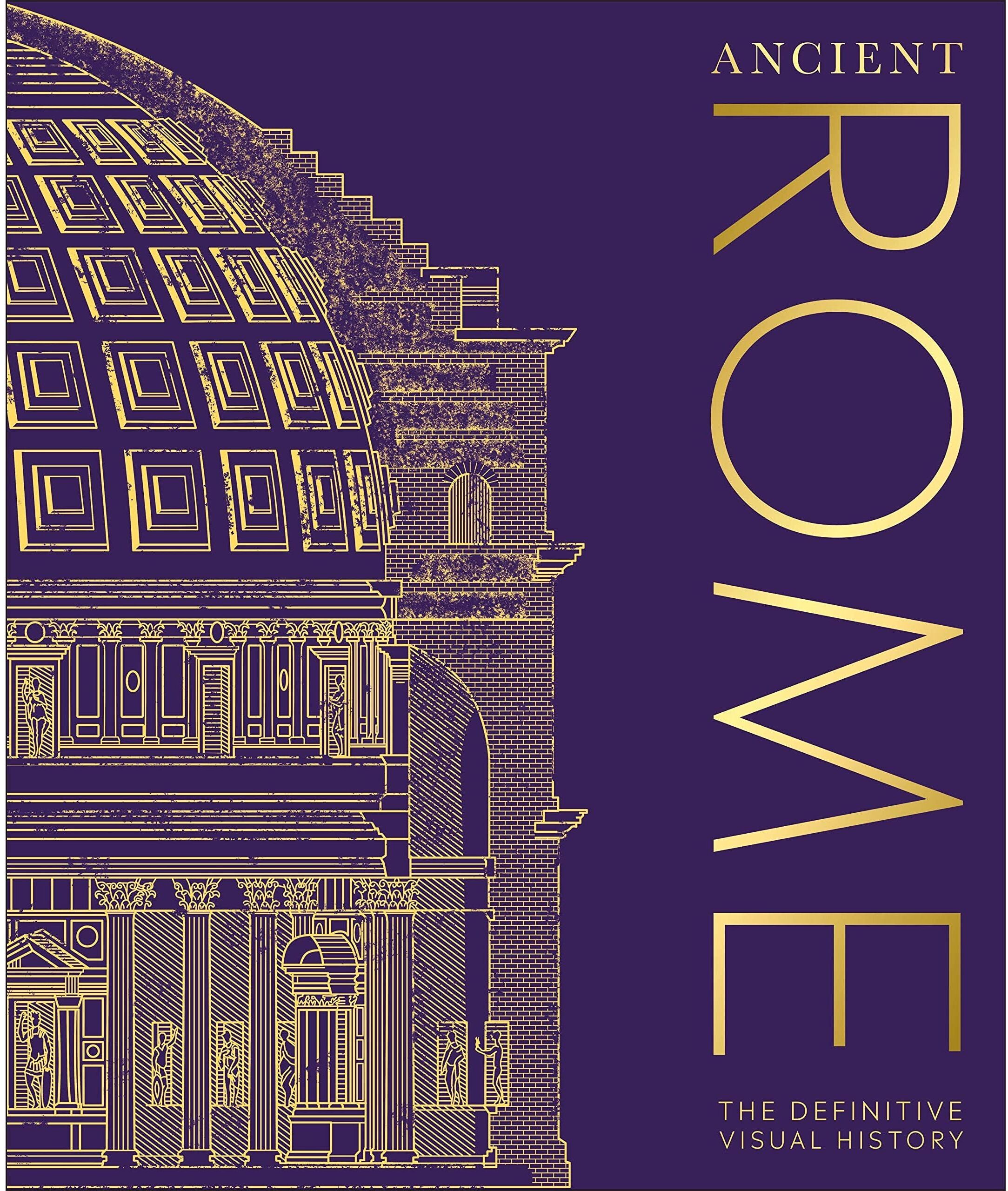
Ancient Rome: The Definitive Visual History (DK Classic History)Immerse yourself in the history of ancient Rome - from its origins as a small settlement on the Palatine Hill to its peak as an empire reigning over 90 million people, and its tumultuous decline. Covering more than 1,000 years of history, and an empire that stretched from Scotland to Syria, Ancient Rome reveals in vivid detail all of the key political, cultural, and military events that shaped the Roman Empire and explores what it was like to live in a society that laid the foundations for many aspects of the modern world. Sumptuous photography and engaging text cover every facet of life in ancient Rome, from art, entertainment, and fashion to engineering, medicine, and war, while detailed maps trace the rise of the mighty Roman Empire. Step back in time in the pages of this history book to discover:- Themed spreads explore developments in areas such as sculpture, religion, warfare, and engineering. - Includes tales of the most dramatic events and battles in Roman history, as well as profiles of influential historical and cultural figures. - An optional 80pp reference section includes sections on rulers, gods and goddesses, and key sites. Featuring Rome's greatest emperors, from Augustus to Constantine, as well as profiles of generals, historians, and influential women, Ancient Rome also delves into the fascinating stories of gladiators, bakers, and enslaved people. The most iconic buildings of Rome are brought to life with specially commissioned CGI recreations, while the stories of ordinary citizens, soldiers, and persecuted groups from across the empire are told with the help of illustrations, artefacts, and eyewitness accounts. Beautifully illustrated and unparalleled in scope, Ancient Rome is the perfect book for anyone who is interested in this defining period of world history.19,95 £*Shipping: 2,99 £Secure redirect to the provider
-
Can you cultivate a pimple?
No, you cannot cultivate a pimple. Pimples are caused by a combination of excess oil, bacteria, and dead skin cells clogging the pores. While you can take steps to prevent pimples, such as keeping your skin clean and using non-comedogenic products, you cannot intentionally cultivate a pimple. Trying to do so could actually harm your skin and lead to more breakouts. **
-
How do you cultivate yeast?
To cultivate yeast, you can start by creating a mixture of warm water, sugar, and flour to create a feeding ground for the yeast. Once the mixture is ready, you can add a small amount of commercial yeast or use natural sources of yeast, such as fruit or grains, to introduce the yeast culture. Then, you can let the mixture sit in a warm, dark place to allow the yeast to grow and multiply. Regular feeding and maintenance of the yeast culture will help it thrive and be ready for use in baking or brewing. **
-
How do you cultivate sunflowers?
To cultivate sunflowers, start by choosing a sunny location with well-drained soil. Plant the sunflower seeds directly into the ground after the last frost, spacing them about 6 inches apart. Water the seeds regularly, keeping the soil consistently moist but not waterlogged. As the sunflowers grow, provide support for the tall stems if needed. Additionally, consider fertilizing the soil with a balanced fertilizer to promote healthy growth. Finally, enjoy watching the sunflowers bloom and provide a beautiful addition to your garden. **
-
How do you cultivate melons?
To cultivate melons, start by preparing well-drained soil with plenty of organic matter. Plant melon seeds or seedlings in a sunny location with plenty of space for the vines to spread out. Water the plants regularly, keeping the soil consistently moist but not waterlogged. Fertilize the plants with a balanced fertilizer throughout the growing season. As the melons start to develop, place a straw or cardboard under each fruit to prevent rot and keep them off the ground. Harvest the melons when they are fully ripe and have a sweet aroma. **
* All prices are inclusive of VAT and, if applicable, plus shipping costs. The offer information is based on the details provided by the respective shop and is updated through automated processes. Real-time updates do not occur, so deviations can occur in individual cases. ** Note: Parts of this content were created by AI.