Buy pernitz.co.at ?
We are moving the project
pernitz.co.at .
Are you interested in purchasing the domain
pernitz.co.at ?
domain@kv-gmbh.de · 0541-91531010
Buy pernitz.co.at ?
Is X-ray radiation actually radioactive radiation?
No, X-ray radiation is not actually radioactive radiation. X-rays are a form of electromagnetic radiation, similar to visible light and radio waves, and are produced by the movement of electrons in atoms. On the other hand, radioactive radiation is emitted by the decay of unstable atomic nuclei, such as in the case of radioactive elements like uranium or radium. While both types of radiation can have harmful effects on living organisms, they are fundamentally different in their origins and properties. **
Is infrared radiation warmer than UV radiation?
No, infrared radiation is not necessarily warmer than UV radiation. The warmth of radiation depends on its intensity and the source of the radiation. Infrared radiation is often associated with warmth because it is emitted by warm objects, such as the sun or a heating element. UV radiation, on the other hand, is not typically associated with warmth, but rather with its ability to cause sunburn and damage to the skin. **

Similar search terms for Radiation
Top-Angebote
Products related to Radiation:
-
Inspire Select RFID Signal Blocking Faraday Bag Set Anti Theft Car Key Shield & Radiation Proof Phone Privacy Wallet For Travel mYour privacy and security shouldnt be at risk just because youre on the move. This smart shielding solution protects your essentials from digital theft, unwanted tracking, and signal interferencegiving you peace of mind anywhere you travel. Designed...38,97 $*Shipping: 0,00 $Secure redirect to the provider
-
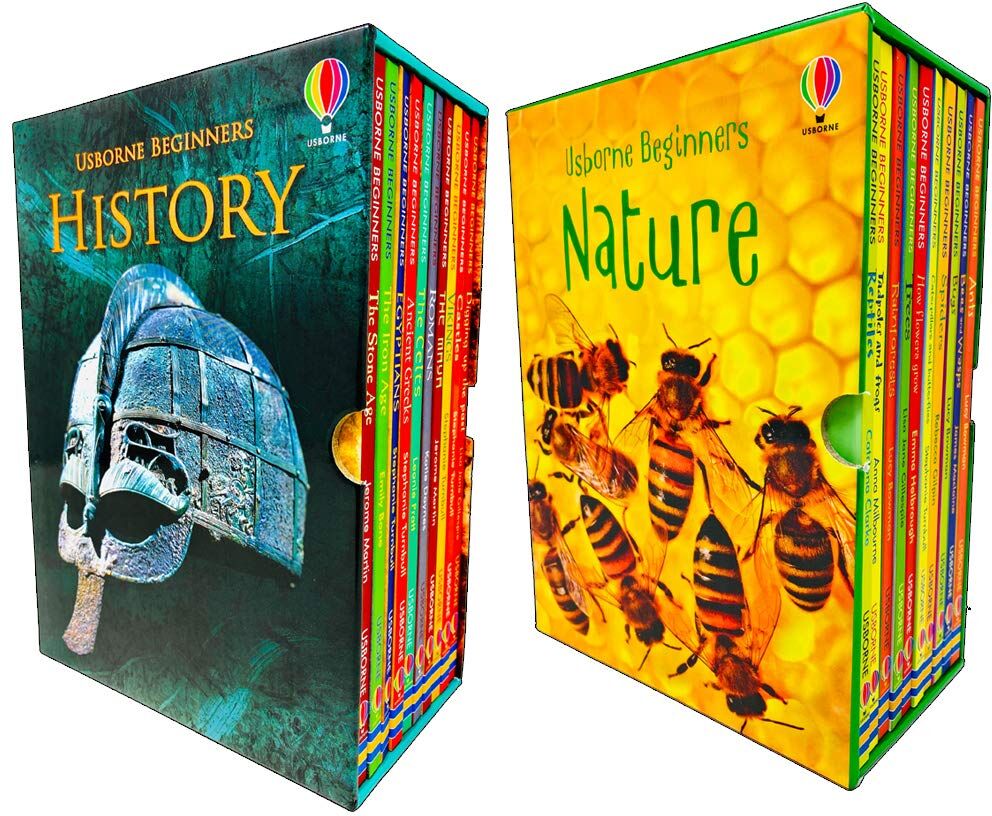
Usborne Publishing Ltd Usborne Beginners History & Usborne Beginners Nature 20 Books Collection Box SetTitles in this set: Usborne Beginners History Stone Age Iron Age Egyptians Ancient Greeks Celts Romans The Maya Vikings Castles Digging Up the Past. Usborne Beginners Nature Reptiles Tadpoles and Frogs Rainforest Trees How Flowers Grow Caterpillars and Butterflies Spiders Bugs Bees & Wasps Ants Description Stone Age This simple information book follows the history of Stone Age people and how they lived. Iron Age This simple information book charts the history of Iron Age people and how they lived, including their farming methods, the gods they prayed to and the hill forts where they lived. Egyptians Who were the ancient Egyptians? Why did they build pyramids and how were mummies made? Ancient Greeks Find out about Ancient Greece, what people wore, ate and did for fun and learn about some of the most famous philosophers and mathematicians of the age in this compelling book for beginner readers. Celts Who were the Celts exactly? Did you know they lived on top of hills? Do you have any idea how Celtic warriors made themselves look really scary in battle? Romans Who were the ancient Romans? Where did they go to eat, shop and wash? What did they do for fun? The Maya Who were the Maya? Where did they live? Why did they build tall stone temples? Vikings Find out what it was like to be a Viking, and learn about Viking homes, feasts, boats, gods and much more in this fascinating book. Castles Who lived in a castle, and what was it like? Children can find out the answers to these questions and lots more about the wonderful world of castles in this informative book. Digging Up the Past How do ancient things get buried? Who digs them up? And what do they find? Beginner readers can find answers to these questions and more in this colourful information book. Reptiles This is a fantastic brand new addition to the "Beginners" series, designed to provide an informative introduction to trees and plant-life for young readers. Tadpoles and Frogs Vivid, full colour illustrations and photographs on every page, accompanied by short, informative text. Rainforest It offers a terrific reading practice for children who prefer fact to fiction. It is developed with a reading expert from Roehampton University to help young readers grow in confidence. Trees This is a fantastic brand new addition to the 'Beginners' series, designed to provide an informative introduction to trees and plant-life for young readers. How Flowers Grow How do flowers grow in dry deserts? How do animals help to spread seeds? Which flower smells like rottng meat? Caterpillars and Butterflies Usborne Beginners are colourful information books for children beginning to read on their own. Spiders Usborne Beginners are colourful information books for children beginning to read on their own. Bugs Usborne Beginners are colourful information books for children beginning to read on their own. Bees & Wasps A slim and unintimidating book which belies its contents - a wealth of information, much of which will be...34,99 £*Shipping: 2,99 £Secure redirect to the provider
-
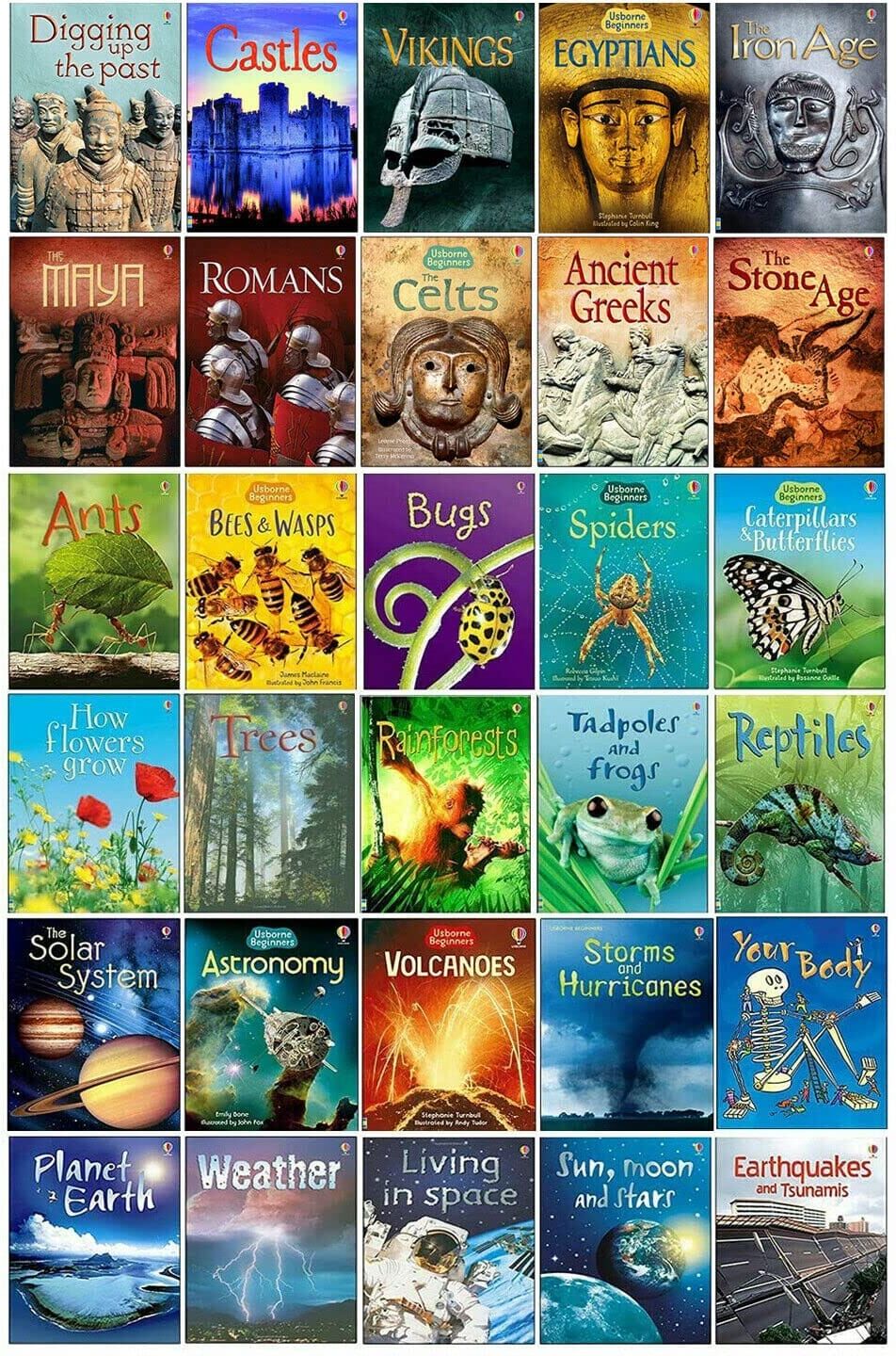
Usborne Beginners Nature, Science & History Collection 30 Books Set - Ages 4-10 - Paperback Usborne Publishing LtdTitles in This Set: Usborne Beginners Nature 10 Books: 1. Ants 2. Bees & Wasps 3. Bugs 4. Spiders 5. Tadpoles and Frogs 6. Caterpillars and Butterflies 7. How Flowers Grow 8. Trees 9. Rainforest 10. Reptiles Usborne Beginners Science 10 Books: 1. Earthquakes & Tsunamis 2. Sun Moon and Stars 3. Living in Space 4. Storms and Hurricanes 5. Volcanoes 6. Astronomy 7. The Solar System 8. Your Body 9. Planet Earth 10. Weather Usborne Beginners History 10 Books: Titles in This Set: 1. Ancient Greeks 2. Castles 3. Celts 4. Digging Up the Past 5. Egyptians 6. Iron Age 7. Maya 8. Romans 9. Stone Age 10. Vikings Description : Usborne Beginners Nature 10 Books Ants Where do ants live? What do they eat? How much weight can they carry? Little children can find out the answers to these questions and much more in this simple introduction to the world of ants. Bees & Wasps What do bees and wasps eat? What type of nests do they make? How do bees make honey? Find out the answers and lots more in this intriguing introduction to the fascinating world of bees and wasps. Bugs ''There are all kinds of different bugs. Some can jump up high. Other bugs have lots of legs.” Bugs is part of an exciting reading series for young children, with lots of pictures and very simple text. Spiders “Spiders have eight legs. Most of them have eight eyes, but some of them can’t see very well.” Learn all about spiders in this great book for children learning to read by themselves. Tadpoles and Frogs From egg to frog, find out about the entire life cycle of a frog in this easy-to-read fully illustrated book for young learners ages 4+. It comes complete with weblinks so you can see the process for yourself. Caterpillars and Butterflies A beautifully illustrated introduction to the life of butterflies and caterpillars, with easy to read text for beginner readers. The life cycle of a butterfly is shown with stunning photographs and illustrations, and there are links to carefully selected websites with videos that show butterflies emerging from their pupae. How Flowers Grow How do flowers grow in dry deserts? How do animals help to spread seeds? Which flower smells like rotting meat? Find out in this great book for young readers ages four and up. Trees How do trees use their leaves to make food? Why do they grow flowers and fruit? Which animals live inside a tree trunk and build nests in its branches? How can we help to protect trees? This book has all the answers and much more, along with photographs, step-by-step illustrations, simple text and links to websites with video clips and activities. Rainforests Learn all about the rainforest in this fantastic easy-to-read book for children 4+ beginning to strike out on their own. From towering trees to rainforest rivers, this fully-illustrated book also features links to carefully selected websites. Reptiles Learn all about the lizard world in this fully-illustrated guide, the latest in the Usborne Beginners series. From scaly skin to tongue tricks...42,75 £*Shipping: 0,00 £Secure redirect to the provider
-
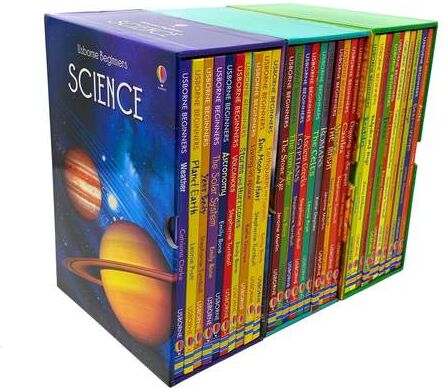
Usborne Beginners Series – 30 Book Collection Box Set Children’s Educational Books (History, Nature & Science) KS1 KS2Usborne Beginners Series 30 Books Collection Box Set (History- Nature- Science) Build a strong foundation in knowledge and reading with the Usborne Beginners Series – 30 Books Collection Box Set, published by Usborne. This comprehensive educational collection introduces children to a wide range of topics across history, science, and nature, using clear language, engaging illustrations, and structured layouts designed for young learners. Perfectly suited for KS1 and KS2 pupils, these books support both curriculum learning and independent reading. From natural disasters and wildlife to historical events and scientific discoveries, the series encourages curiosity, critical thinking, and a love of learning. Description Titles in this set: History Stone Age Iron Age Egyptians Ancient Greeks Celts Romans The Maya Vikings Castles Digging Up the Past Nature Reptiles Tadpoles and Frogs Rainforest Trees How Flowers Grow Caterpillars and Butterflies Spiders Bugs Bees & Wasps Ants Science Earthquakes & Tsunamis Sun Moon and Stars Living in Space Storms and Hurricanes Volcanoes Astronomy The Solar System Your Body Planet Earth Weather Related Tags: Usborne, Usbourne42,75 £*Shipping: 0,00 £Secure redirect to the provider

-
Does beta-plus radiation belong to ionizing radiation?
Yes, beta-plus radiation belongs to ionizing radiation. Beta-plus radiation consists of positrons, which are positively charged particles that have the ability to ionize atoms by knocking off electrons from their orbits. This process can lead to the formation of charged particles and free radicals, which can cause damage to biological tissues and DNA. Therefore, beta-plus radiation is considered a form of ionizing radiation due to its ability to ionize atoms and cause biological damage. **
-
Is mobile phone radiation alpha, beta, or gamma radiation?
Mobile phone radiation is not classified as alpha, beta, or gamma radiation. It is a form of non-ionizing electromagnetic radiation, specifically in the radiofrequency range. This type of radiation is emitted by mobile phones and other wireless devices, and while it is not as powerful as ionizing radiation, there is ongoing research to understand its potential health effects. **
-
How can one convert infrared radiation into microwave radiation?
One way to convert infrared radiation into microwave radiation is by using a device called a rectifying antenna, also known as a rectenna. A rectenna is a combination of an antenna and a rectifier, which can convert the incoming infrared radiation into electrical energy. This electrical energy can then be used to generate microwave radiation through a microwave generator. Another method is to use a material with nonlinear properties, such as a semiconductor, to directly convert the infrared radiation into microwave radiation through a process called harmonic generation. Both of these methods can be used to efficiently convert infrared radiation into microwave radiation for various applications. **
-
What is radiation?
Radiation is the emission of energy in the form of waves or particles. It can be found in various forms, such as electromagnetic radiation like light and radio waves, or in the form of particles like alpha, beta, and gamma radiation. Radiation can be natural, such as sunlight and cosmic rays, or man-made, like X-rays and nuclear radiation. Exposure to high levels of radiation can be harmful to living organisms, damaging cells and DNA. **
Is radiation carcinogenic?
Radiation can be carcinogenic, meaning it has the potential to cause cancer. Exposure to high levels of ionizing radiation, such as from nuclear accidents or certain medical treatments, has been linked to an increased risk of developing cancer. However, not all types of radiation are carcinogenic, and the risk of cancer from radiation exposure depends on the dose and duration of exposure. It's important to follow safety guidelines and regulations to minimize the risk of harmful radiation exposure. **
What is the difference between radioactive radiation and X-ray radiation?
Radioactive radiation is the spontaneous emission of energy from the nucleus of an unstable atom, while X-ray radiation is a form of electromagnetic radiation produced by high-energy processes. Radioactive radiation is typically emitted by radioactive materials such as uranium or radium, while X-ray radiation is produced artificially using X-ray machines. Both types of radiation can be harmful to living organisms, but X-rays are generally considered to be more controllable and less harmful than radioactive radiation. **
Top-Angebote
Products related to Radiation:
-
Multicon Wholesale Hub Dental X Ray Apron Radiation Protective Lead Vest For Dentist Patient Shielding Dental X Ray Apron Radiation Protective Lead Vest For Dentist Patient ShieldingFeel more confident during every imaging session with dependable protection designed for dental and clinical environments. This dental x ray apron helps shield the body during Xray procedures while offering a simple, professional veststyle fit....244,97 $*Shipping: 0,00 $Secure redirect to the provider
-
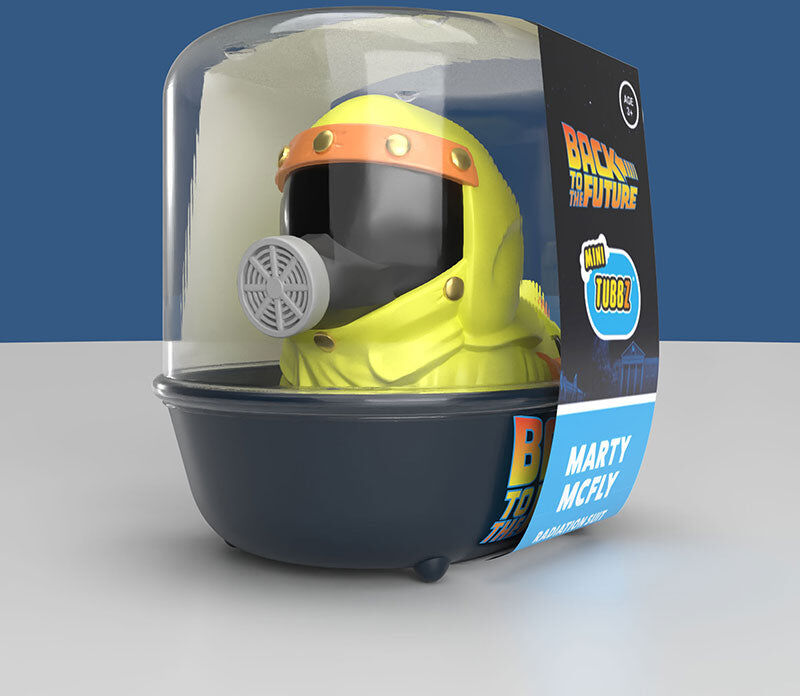
Numskull Back to the Future Marty McFly Radiation Suit Mini TUBBZ Figure - 5 cm Tall YellowOfficially licensed collectible reimagines Marty McFly as a characterful cosplaying duck in his unmistakable yellow anti-radiation suit. Part of the Mini TUBBZ range, this compact figure stands approximately 5 cm tall outside its packaging and is around half the size of a standard TUBBZ collectible. The sculpt includes distinctive details from Marty's protective outfit, including the bright yellow suit, dark visor, and respirator mask. The figure is supplied in a miniature bathtub featuring the Back to the Future logo.6,39 £*Shipping: 3,95 £Secure redirect to the provider
-
Inspire Select RFID Signal Blocking Faraday Bag Set Anti Theft Car Key Shield & Radiation Proof Phone Privacy Wallet For Travel mYour privacy and security shouldnt be at risk just because youre on the move. This smart shielding solution protects your essentials from digital theft, unwanted tracking, and signal interferencegiving you peace of mind anywhere you travel. Designed...38,97 $*Shipping: 0,00 $Secure redirect to the provider
-
Usborne Publishing Ltd Usborne Beginners History & Usborne Beginners Nature 20 Books Collection Box SetTitles in this set: Usborne Beginners History Stone Age Iron Age Egyptians Ancient Greeks Celts Romans The Maya Vikings Castles Digging Up the Past. Usborne Beginners Nature Reptiles Tadpoles and Frogs Rainforest Trees How Flowers Grow Caterpillars and Butterflies Spiders Bugs Bees & Wasps Ants Description Stone Age This simple information book follows the history of Stone Age people and how they lived. Iron Age This simple information book charts the history of Iron Age people and how they lived, including their farming methods, the gods they prayed to and the hill forts where they lived. Egyptians Who were the ancient Egyptians? Why did they build pyramids and how were mummies made? Ancient Greeks Find out about Ancient Greece, what people wore, ate and did for fun and learn about some of the most famous philosophers and mathematicians of the age in this compelling book for beginner readers. Celts Who were the Celts exactly? Did you know they lived on top of hills? Do you have any idea how Celtic warriors made themselves look really scary in battle? Romans Who were the ancient Romans? Where did they go to eat, shop and wash? What did they do for fun? The Maya Who were the Maya? Where did they live? Why did they build tall stone temples? Vikings Find out what it was like to be a Viking, and learn about Viking homes, feasts, boats, gods and much more in this fascinating book. Castles Who lived in a castle, and what was it like? Children can find out the answers to these questions and lots more about the wonderful world of castles in this informative book. Digging Up the Past How do ancient things get buried? Who digs them up? And what do they find? Beginner readers can find answers to these questions and more in this colourful information book. Reptiles This is a fantastic brand new addition to the "Beginners" series, designed to provide an informative introduction to trees and plant-life for young readers. Tadpoles and Frogs Vivid, full colour illustrations and photographs on every page, accompanied by short, informative text. Rainforest It offers a terrific reading practice for children who prefer fact to fiction. It is developed with a reading expert from Roehampton University to help young readers grow in confidence. Trees This is a fantastic brand new addition to the 'Beginners' series, designed to provide an informative introduction to trees and plant-life for young readers. How Flowers Grow How do flowers grow in dry deserts? How do animals help to spread seeds? Which flower smells like rottng meat? Caterpillars and Butterflies Usborne Beginners are colourful information books for children beginning to read on their own. Spiders Usborne Beginners are colourful information books for children beginning to read on their own. Bugs Usborne Beginners are colourful information books for children beginning to read on their own. Bees & Wasps A slim and unintimidating book which belies its contents - a wealth of information, much of which will be...34,99 £*Shipping: 2,99 £Secure redirect to the provider
-
Is X-ray radiation actually radioactive radiation?
No, X-ray radiation is not actually radioactive radiation. X-rays are a form of electromagnetic radiation, similar to visible light and radio waves, and are produced by the movement of electrons in atoms. On the other hand, radioactive radiation is emitted by the decay of unstable atomic nuclei, such as in the case of radioactive elements like uranium or radium. While both types of radiation can have harmful effects on living organisms, they are fundamentally different in their origins and properties. **
-
Is infrared radiation warmer than UV radiation?
No, infrared radiation is not necessarily warmer than UV radiation. The warmth of radiation depends on its intensity and the source of the radiation. Infrared radiation is often associated with warmth because it is emitted by warm objects, such as the sun or a heating element. UV radiation, on the other hand, is not typically associated with warmth, but rather with its ability to cause sunburn and damage to the skin. **
-
Does beta-plus radiation belong to ionizing radiation?
Yes, beta-plus radiation belongs to ionizing radiation. Beta-plus radiation consists of positrons, which are positively charged particles that have the ability to ionize atoms by knocking off electrons from their orbits. This process can lead to the formation of charged particles and free radicals, which can cause damage to biological tissues and DNA. Therefore, beta-plus radiation is considered a form of ionizing radiation due to its ability to ionize atoms and cause biological damage. **
-
Is mobile phone radiation alpha, beta, or gamma radiation?
Mobile phone radiation is not classified as alpha, beta, or gamma radiation. It is a form of non-ionizing electromagnetic radiation, specifically in the radiofrequency range. This type of radiation is emitted by mobile phones and other wireless devices, and while it is not as powerful as ionizing radiation, there is ongoing research to understand its potential health effects. **
Similar search terms for Radiation
-
Usborne Beginners Nature, Science & History Collection 30 Books Set - Ages 4-10 - Paperback Usborne Publishing LtdTitles in This Set: Usborne Beginners Nature 10 Books: 1. Ants 2. Bees & Wasps 3. Bugs 4. Spiders 5. Tadpoles and Frogs 6. Caterpillars and Butterflies 7. How Flowers Grow 8. Trees 9. Rainforest 10. Reptiles Usborne Beginners Science 10 Books: 1. Earthquakes & Tsunamis 2. Sun Moon and Stars 3. Living in Space 4. Storms and Hurricanes 5. Volcanoes 6. Astronomy 7. The Solar System 8. Your Body 9. Planet Earth 10. Weather Usborne Beginners History 10 Books: Titles in This Set: 1. Ancient Greeks 2. Castles 3. Celts 4. Digging Up the Past 5. Egyptians 6. Iron Age 7. Maya 8. Romans 9. Stone Age 10. Vikings Description : Usborne Beginners Nature 10 Books Ants Where do ants live? What do they eat? How much weight can they carry? Little children can find out the answers to these questions and much more in this simple introduction to the world of ants. Bees & Wasps What do bees and wasps eat? What type of nests do they make? How do bees make honey? Find out the answers and lots more in this intriguing introduction to the fascinating world of bees and wasps. Bugs ''There are all kinds of different bugs. Some can jump up high. Other bugs have lots of legs.” Bugs is part of an exciting reading series for young children, with lots of pictures and very simple text. Spiders “Spiders have eight legs. Most of them have eight eyes, but some of them can’t see very well.” Learn all about spiders in this great book for children learning to read by themselves. Tadpoles and Frogs From egg to frog, find out about the entire life cycle of a frog in this easy-to-read fully illustrated book for young learners ages 4+. It comes complete with weblinks so you can see the process for yourself. Caterpillars and Butterflies A beautifully illustrated introduction to the life of butterflies and caterpillars, with easy to read text for beginner readers. The life cycle of a butterfly is shown with stunning photographs and illustrations, and there are links to carefully selected websites with videos that show butterflies emerging from their pupae. How Flowers Grow How do flowers grow in dry deserts? How do animals help to spread seeds? Which flower smells like rotting meat? Find out in this great book for young readers ages four and up. Trees How do trees use their leaves to make food? Why do they grow flowers and fruit? Which animals live inside a tree trunk and build nests in its branches? How can we help to protect trees? This book has all the answers and much more, along with photographs, step-by-step illustrations, simple text and links to websites with video clips and activities. Rainforests Learn all about the rainforest in this fantastic easy-to-read book for children 4+ beginning to strike out on their own. From towering trees to rainforest rivers, this fully-illustrated book also features links to carefully selected websites. Reptiles Learn all about the lizard world in this fully-illustrated guide, the latest in the Usborne Beginners series. From scaly skin to tongue tricks...42,75 £*Shipping: 0,00 £Secure redirect to the provider
-
Usborne Beginners Series – 30 Book Collection Box Set Children’s Educational Books (History, Nature & Science) KS1 KS2Usborne Beginners Series 30 Books Collection Box Set (History- Nature- Science) Build a strong foundation in knowledge and reading with the Usborne Beginners Series – 30 Books Collection Box Set, published by Usborne. This comprehensive educational collection introduces children to a wide range of topics across history, science, and nature, using clear language, engaging illustrations, and structured layouts designed for young learners. Perfectly suited for KS1 and KS2 pupils, these books support both curriculum learning and independent reading. From natural disasters and wildlife to historical events and scientific discoveries, the series encourages curiosity, critical thinking, and a love of learning. Description Titles in this set: History Stone Age Iron Age Egyptians Ancient Greeks Celts Romans The Maya Vikings Castles Digging Up the Past Nature Reptiles Tadpoles and Frogs Rainforest Trees How Flowers Grow Caterpillars and Butterflies Spiders Bugs Bees & Wasps Ants Science Earthquakes & Tsunamis Sun Moon and Stars Living in Space Storms and Hurricanes Volcanoes Astronomy The Solar System Your Body Planet Earth Weather Related Tags: Usborne, Usbourne42,75 £*Shipping: 0,00 £Secure redirect to the provider
-
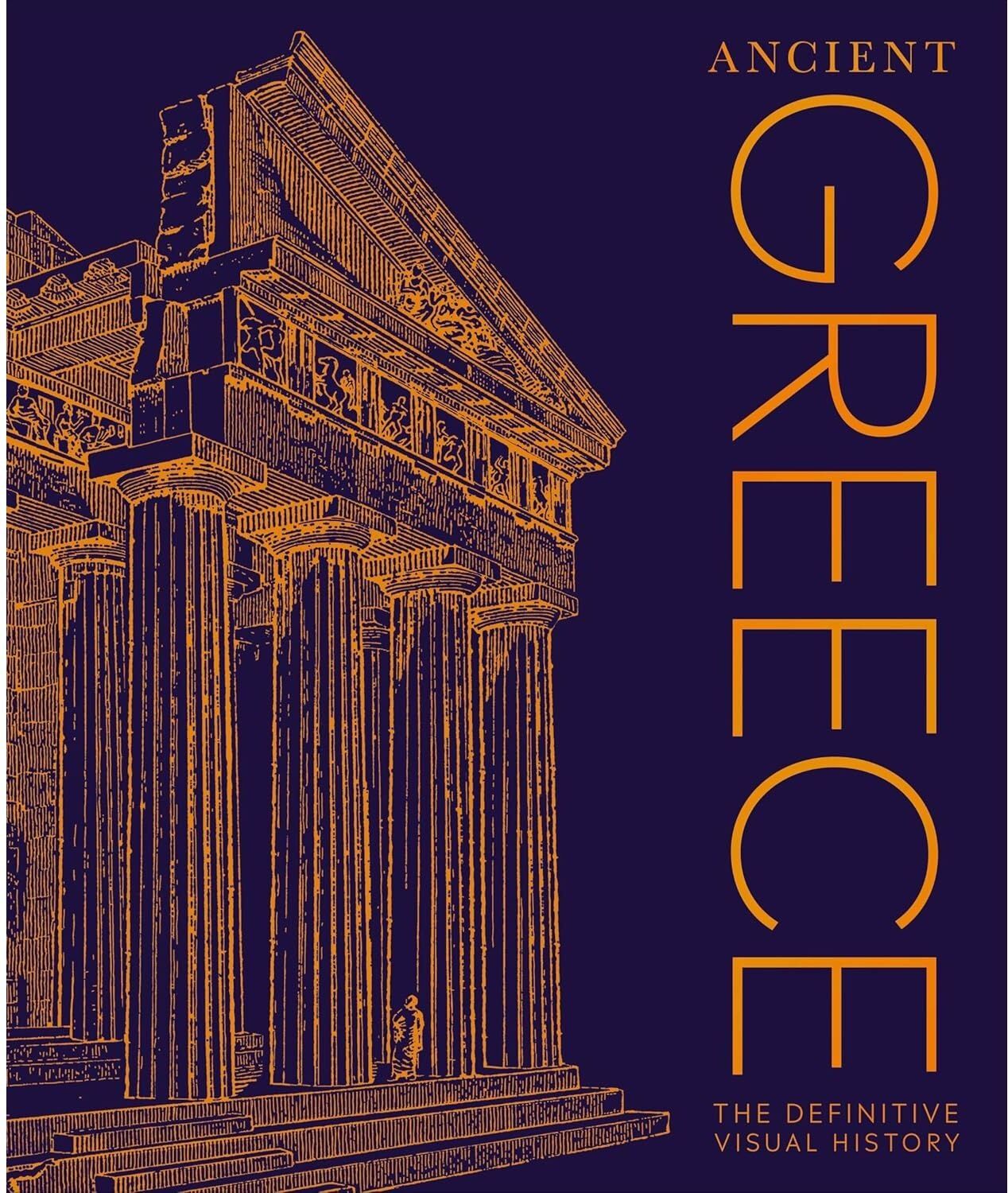
Ancient Greece: The Definitive Visual History (DK Classic History)Embark upon a fascinating journey through ancient Greece – from its rise and fall to its lasting legacy throughout the Western world. Spanning more than 3,000 years, Ancient Greece explores the tumultuous history of this glorious empire in vivid detail – from its Minoan and Mycenaean origins to the apogee of the warring city-states of Athens and Sparta, and from the death of its most charismatic leader, Alexander the Great, to its ultimate defeat by Rome. Sumptuous photography and authoritative, engaging text cover every facet of life in ancient Greece, from art, entertainment, and schools of thought to politics, medicine, and war, while the myths and religious beliefs of the ancient culture are explored and explained in depth. Greece’s military and political power shines through in fascinating maps of its legendary battles. Buried palaces and the Athenian Agora where Plato and Socrates discussed philosophy are brought back to life with stunning CGI artworks. And the stories of everyone from ordinary citizens to lawmakers and the first Olympic athletes are retold through eyewitness accounts and original artefacts.19,99 £*Shipping: 2,99 £Secure redirect to the provider
-
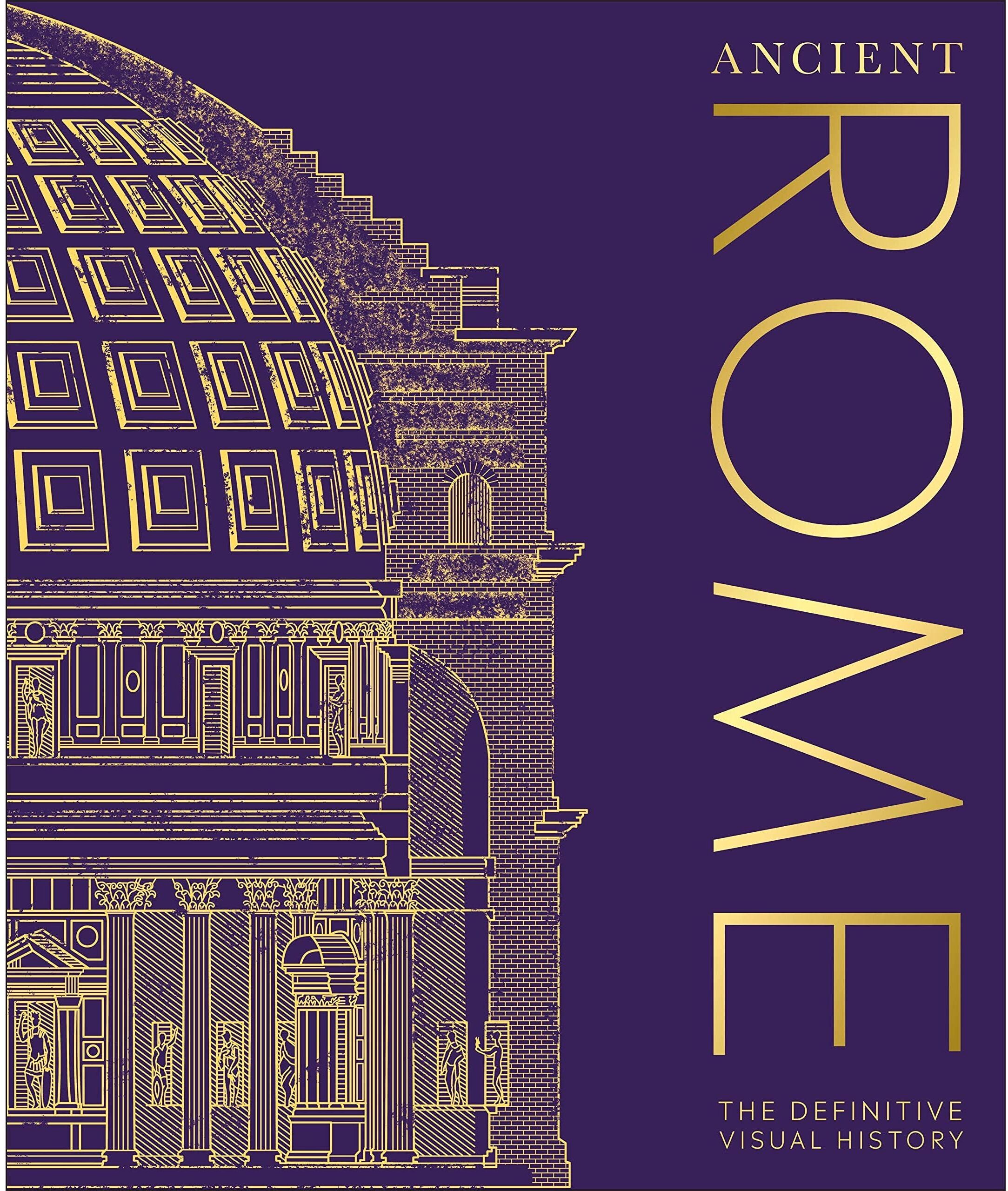
Ancient Rome: The Definitive Visual History (DK Classic History)Immerse yourself in the history of ancient Rome - from its origins as a small settlement on the Palatine Hill to its peak as an empire reigning over 90 million people, and its tumultuous decline. Covering more than 1,000 years of history, and an empire that stretched from Scotland to Syria, Ancient Rome reveals in vivid detail all of the key political, cultural, and military events that shaped the Roman Empire and explores what it was like to live in a society that laid the foundations for many aspects of the modern world. Sumptuous photography and engaging text cover every facet of life in ancient Rome, from art, entertainment, and fashion to engineering, medicine, and war, while detailed maps trace the rise of the mighty Roman Empire. Step back in time in the pages of this history book to discover:- Themed spreads explore developments in areas such as sculpture, religion, warfare, and engineering. - Includes tales of the most dramatic events and battles in Roman history, as well as profiles of influential historical and cultural figures. - An optional 80pp reference section includes sections on rulers, gods and goddesses, and key sites. Featuring Rome's greatest emperors, from Augustus to Constantine, as well as profiles of generals, historians, and influential women, Ancient Rome also delves into the fascinating stories of gladiators, bakers, and enslaved people. The most iconic buildings of Rome are brought to life with specially commissioned CGI recreations, while the stories of ordinary citizens, soldiers, and persecuted groups from across the empire are told with the help of illustrations, artefacts, and eyewitness accounts. Beautifully illustrated and unparalleled in scope, Ancient Rome is the perfect book for anyone who is interested in this defining period of world history.19,95 £*Shipping: 2,99 £Secure redirect to the provider
-
How can one convert infrared radiation into microwave radiation?
One way to convert infrared radiation into microwave radiation is by using a device called a rectifying antenna, also known as a rectenna. A rectenna is a combination of an antenna and a rectifier, which can convert the incoming infrared radiation into electrical energy. This electrical energy can then be used to generate microwave radiation through a microwave generator. Another method is to use a material with nonlinear properties, such as a semiconductor, to directly convert the infrared radiation into microwave radiation through a process called harmonic generation. Both of these methods can be used to efficiently convert infrared radiation into microwave radiation for various applications. **
-
What is radiation?
Radiation is the emission of energy in the form of waves or particles. It can be found in various forms, such as electromagnetic radiation like light and radio waves, or in the form of particles like alpha, beta, and gamma radiation. Radiation can be natural, such as sunlight and cosmic rays, or man-made, like X-rays and nuclear radiation. Exposure to high levels of radiation can be harmful to living organisms, damaging cells and DNA. **
-
Is radiation carcinogenic?
Radiation can be carcinogenic, meaning it has the potential to cause cancer. Exposure to high levels of ionizing radiation, such as from nuclear accidents or certain medical treatments, has been linked to an increased risk of developing cancer. However, not all types of radiation are carcinogenic, and the risk of cancer from radiation exposure depends on the dose and duration of exposure. It's important to follow safety guidelines and regulations to minimize the risk of harmful radiation exposure. **
-
What is the difference between radioactive radiation and X-ray radiation?
Radioactive radiation is the spontaneous emission of energy from the nucleus of an unstable atom, while X-ray radiation is a form of electromagnetic radiation produced by high-energy processes. Radioactive radiation is typically emitted by radioactive materials such as uranium or radium, while X-ray radiation is produced artificially using X-ray machines. Both types of radiation can be harmful to living organisms, but X-rays are generally considered to be more controllable and less harmful than radioactive radiation. **
* All prices are inclusive of VAT and, if applicable, plus shipping costs. The offer information is based on the details provided by the respective shop and is updated through automated processes. Real-time updates do not occur, so deviations can occur in individual cases. ** Note: Parts of this content were created by AI.