Buy pernitz.co.at ?
We are moving the project
pernitz.co.at .
Are you interested in purchasing the domain
pernitz.co.at ?
domain@kv-gmbh.de · 0541-91531010
Buy pernitz.co.at ?
What is the history of revisionist policy?
Revisionist policy refers to a shift in a country's foreign policy towards a more conciliatory and cooperative approach with its adversaries. The term originated in the context of Soviet foreign policy in the 1950s, when some Communist leaders sought to revise the aggressive and confrontational stance of Stalinism. This led to a more flexible and pragmatic approach to international relations, emphasizing peaceful coexistence and detente. The concept of revisionist policy has since been applied to other countries and contexts, reflecting a willingness to reevaluate and adapt foreign policy strategies in response to changing global dynamics. **
What is the difference between process policy, structural policy, and order policy?
Process policy refers to the rules and procedures that govern how decisions are made and implemented within an organization. Structural policy, on the other hand, pertains to the framework and organization of the institution, including its hierarchy, departments, and reporting structure. Order policy focuses on the sequence and prioritization of tasks and activities within the organization, ensuring that work is carried out efficiently and effectively. Each type of policy plays a crucial role in shaping the overall functioning and success of an organization. **


Similar search terms for Policy
Top-Angebote
Products related to Policy:
-
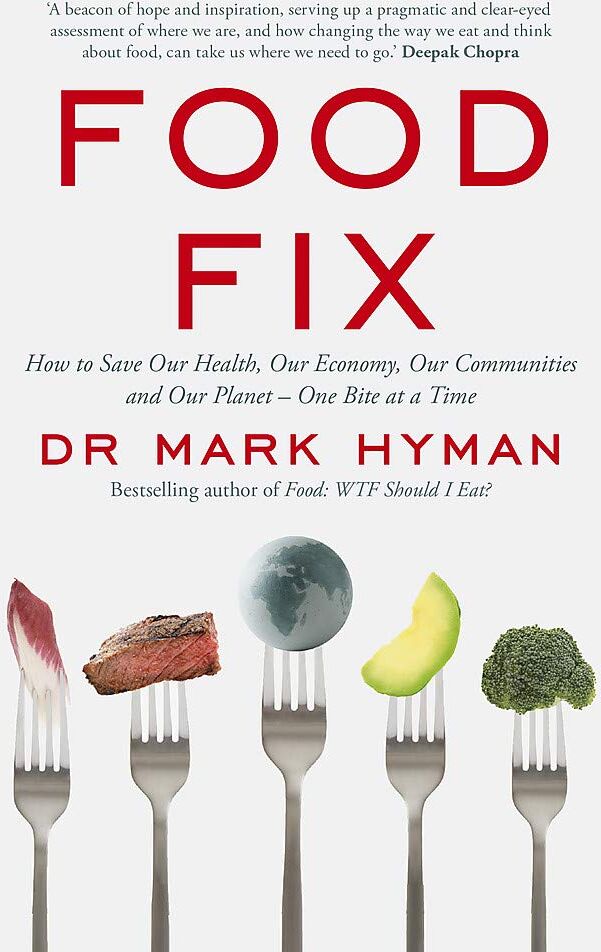
Yellow Kite Food Fix by Mark Hyman MD - Paperback - Food Policy, Health & Environment Non-Fiction BookFood Fix by Mark Hyman is a non-fiction paperback book that explores the connection between food and the crises facing society. Written by New York Times best-selling author and physician Mark Hyman, this book argues that fixing our broken food system could have a positive impact on our health, local economies, communities, and the planet. In Food Fix, Hyman lays bare how industrial food and agriculture systems are shaped by powerful financial interests, driving issues such as obesity and type 2 diabetes. This book is essential reading for anyone concerned about the intersection of food, health, and the environment.3,49 £*Shipping: 2,99 £Secure redirect to the provider
-
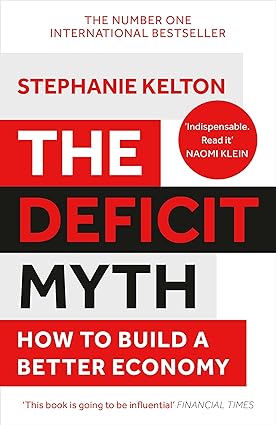
The Deficit Myth by Stephanie Kelton - Modern Monetary Theory - Paperback - John Murray Press - Economics & Public Policy BookThe Deficit Myth by Stephanie Kelton is a thought-provoking book that rethinks how modern economies work. Drawing on Modern Monetary Theory (MMT), Kelton challenges the conventional wisdom that government deficits are inherently dangerous, arguing instead that they can be powerful tools for funding public services and infrastructure. This paperback edition is a clear and accessible explanation of public finance and economic policy, making it essential reading for anyone interested in these topics. About the book, economist Stephanie Kelton dismantles the idea that government deficits are a looming disaster, showing that for countries that issue their own currency, the true constraint on spending is not a shortage of money but a shortage of political will to invest in the things that matter.5,99 £*Shipping: 2,99 £Secure redirect to the provider
-
Yellow Kite Dr Mark Hyman 2 Books Collection Set (The Pegan Diet & Food Fix) - Paperback Non Fiction Nutrition & Food Policy Set - NewThis collection of two books by Dr Mark Hyman brings together his influential works on food and health: The Pegan Diet and Food Fix. Written by a New York Times bestselling functional-medicine physician, these titles combine practical nutrition guidance with a hard-hitting look at the politics of food. The Pegan Diet blends the best principles of the paleo and vegan approaches into 21 practical rules, featuring 30 recipes and clear infographics. Food Fix offers a complete picture of how to eat well personally while understanding the wider forces shaping the global food system. The books are written in a clear and accessible style, making them ideal for health-conscious readers and anyone curious about food policy. The paperback set is a brand-new edition, published by Yellow Kite.12,99 £*Shipping: 2,99 £Secure redirect to the provider
-
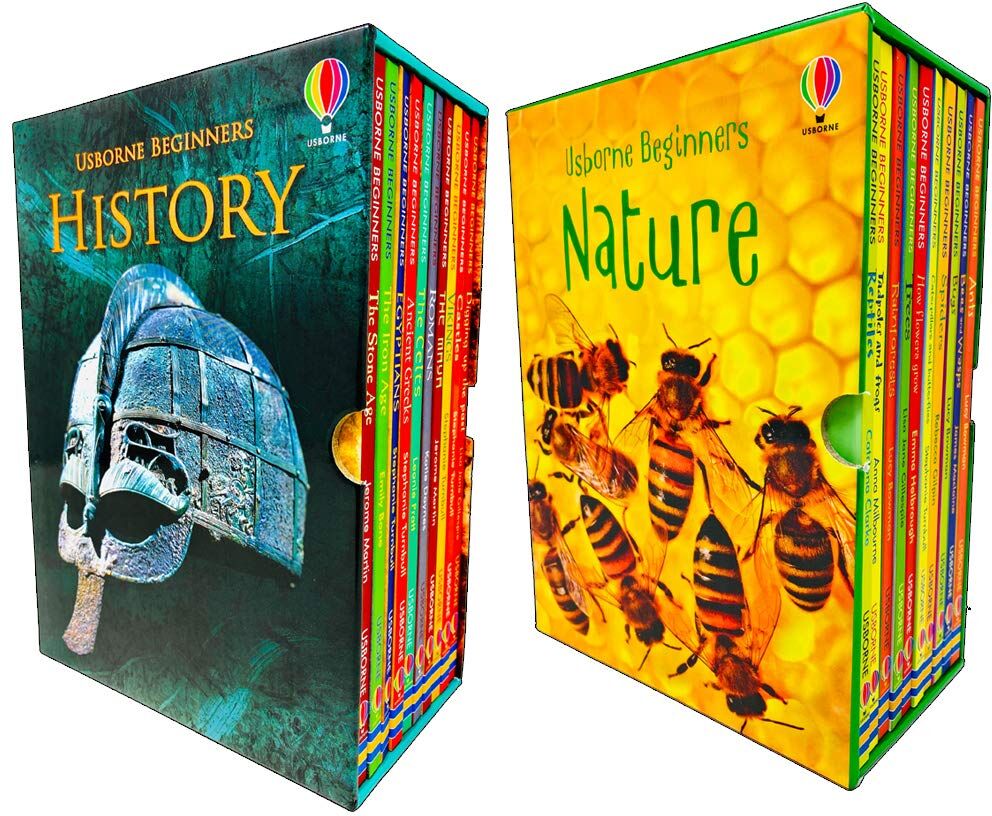
Usborne Publishing Ltd Usborne Beginners History & Usborne Beginners Nature 20 Books Collection Box SetTitles in this set: Usborne Beginners History Stone Age Iron Age Egyptians Ancient Greeks Celts Romans The Maya Vikings Castles Digging Up the Past. Usborne Beginners Nature Reptiles Tadpoles and Frogs Rainforest Trees How Flowers Grow Caterpillars and Butterflies Spiders Bugs Bees & Wasps Ants Description Stone Age This simple information book follows the history of Stone Age people and how they lived. Iron Age This simple information book charts the history of Iron Age people and how they lived, including their farming methods, the gods they prayed to and the hill forts where they lived. Egyptians Who were the ancient Egyptians? Why did they build pyramids and how were mummies made? Ancient Greeks Find out about Ancient Greece, what people wore, ate and did for fun and learn about some of the most famous philosophers and mathematicians of the age in this compelling book for beginner readers. Celts Who were the Celts exactly? Did you know they lived on top of hills? Do you have any idea how Celtic warriors made themselves look really scary in battle? Romans Who were the ancient Romans? Where did they go to eat, shop and wash? What did they do for fun? The Maya Who were the Maya? Where did they live? Why did they build tall stone temples? Vikings Find out what it was like to be a Viking, and learn about Viking homes, feasts, boats, gods and much more in this fascinating book. Castles Who lived in a castle, and what was it like? Children can find out the answers to these questions and lots more about the wonderful world of castles in this informative book. Digging Up the Past How do ancient things get buried? Who digs them up? And what do they find? Beginner readers can find answers to these questions and more in this colourful information book. Reptiles This is a fantastic brand new addition to the "Beginners" series, designed to provide an informative introduction to trees and plant-life for young readers. Tadpoles and Frogs Vivid, full colour illustrations and photographs on every page, accompanied by short, informative text. Rainforest It offers a terrific reading practice for children who prefer fact to fiction. It is developed with a reading expert from Roehampton University to help young readers grow in confidence. Trees This is a fantastic brand new addition to the 'Beginners' series, designed to provide an informative introduction to trees and plant-life for young readers. How Flowers Grow How do flowers grow in dry deserts? How do animals help to spread seeds? Which flower smells like rottng meat? Caterpillars and Butterflies Usborne Beginners are colourful information books for children beginning to read on their own. Spiders Usborne Beginners are colourful information books for children beginning to read on their own. Bugs Usborne Beginners are colourful information books for children beginning to read on their own. Bees & Wasps A slim and unintimidating book which belies its contents - a wealth of information, much of which will be...34,99 £*Shipping: 2,99 £Secure redirect to the provider

-
What is the difference between process policy, structural policy, and regulatory policy?
Process policy refers to the rules and procedures that govern how tasks are carried out within an organization. Structural policy pertains to the overall design and organization of an institution, including its hierarchy, reporting relationships, and division of responsibilities. Regulatory policy, on the other hand, involves the establishment and enforcement of rules and standards by a governing body to ensure compliance and protect the public interest. Each type of policy serves a distinct purpose in guiding behavior and decision-making within an organization or society. **
-
What is the history of the One-World Policy?
The One-World Policy is a concept that advocates for global cooperation and unity to address pressing global issues. It has its roots in the idea of a world government proposed by thinkers like Immanuel Kant in the 18th century. The term gained popularity in the 20th century with the rise of globalization and the need for international collaboration on issues like climate change, poverty, and security. While the concept has supporters who believe it could lead to a more peaceful and prosperous world, it also faces criticism and challenges due to concerns about sovereignty and power dynamics. **
-
What is the history of appeasement policy? Thank you.
The appeasement policy was a strategy employed by European powers in the 1930s, particularly by Britain and France, in response to the aggressive actions of Nazi Germany. The policy aimed to avoid conflict and maintain peace by giving in to some of Germany's demands, such as the annexation of Czechoslovakia's Sudetenland. The policy was based on the belief that by appeasing Hitler, further aggression could be prevented. However, this approach ultimately failed as it only emboldened Hitler and led to the outbreak of World War II. The policy of appeasement is now widely criticized for its role in allowing Nazi Germany to expand its power and influence. **
-
What is the difference between regional policy and cohesion policy?
Regional policy focuses on addressing economic disparities and promoting development within specific regions, while cohesion policy aims to reduce disparities and promote harmonious development across all regions within the European Union. Regional policy is more focused on specific geographic areas, while cohesion policy has a broader scope and aims to promote overall economic and social cohesion within the EU. Both policies work together to support sustainable development and reduce inequalities among regions. **
What is the difference between domestic policy and foreign policy?
Domestic policy refers to the decisions, laws, and actions that a government takes within its own borders to address issues such as healthcare, education, and the economy. On the other hand, foreign policy involves a government's strategies and actions in dealing with other countries, including diplomacy, trade, and military intervention. While domestic policy focuses on internal matters, foreign policy is concerned with external relations and international affairs. Both types of policy are crucial for a government to effectively govern and represent its interests at home and abroad. **
What is the difference between refugee policy and asylum policy?
Refugee policy and asylum policy both deal with the protection and support of individuals fleeing persecution or conflict, but they differ in their scope and focus. Refugee policy typically refers to the laws and regulations governing the admission, resettlement, and rights of individuals recognized as refugees by international or national authorities. Asylum policy, on the other hand, specifically pertains to the process and criteria for granting asylum to individuals who are seeking protection within a particular country's borders. While refugee policy addresses the broader framework for addressing refugee situations, asylum policy focuses on the specific procedures and rights for individuals seeking refuge within a particular country. **
Top-Angebote
Products related to Policy:
-
ClearBags "#10 Policy Premium Envelopes, White 4 1/8"" x 9 1/2"" 50 pack"White, Premium Opaque Envelopes feature a stellar brightness and balanced white shade. The smooth and uniform print surface delivers rich and vibrant colors. White, Premium Opaque Envelopes provide uncompromising quality and excellent value....24,79 $*Shipping: 0,00 $Secure redirect to the provider
-
ClearBags "#10 Policy Premium Envelopes, Natural 4 1/8"" x 9 1/2"" 50 pack"Natural, Premium Opaque Envelopes feature a smooth and uniform print surface delivers rich and vibrant colors. Natural, Premium Opaque Envelopes provide uncompromising quality and excellent value. FSC and SFI-Certified and endorsed by the Rainforest...27,56 $*Shipping: 0,00 $Secure redirect to the provider
-
Yellow Kite Food Fix by Mark Hyman MD - Paperback - Food Policy, Health & Environment Non-Fiction BookFood Fix by Mark Hyman is a non-fiction paperback book that explores the connection between food and the crises facing society. Written by New York Times best-selling author and physician Mark Hyman, this book argues that fixing our broken food system could have a positive impact on our health, local economies, communities, and the planet. In Food Fix, Hyman lays bare how industrial food and agriculture systems are shaped by powerful financial interests, driving issues such as obesity and type 2 diabetes. This book is essential reading for anyone concerned about the intersection of food, health, and the environment.3,49 £*Shipping: 2,99 £Secure redirect to the provider
-
The Deficit Myth by Stephanie Kelton - Modern Monetary Theory - Paperback - John Murray Press - Economics & Public Policy BookThe Deficit Myth by Stephanie Kelton is a thought-provoking book that rethinks how modern economies work. Drawing on Modern Monetary Theory (MMT), Kelton challenges the conventional wisdom that government deficits are inherently dangerous, arguing instead that they can be powerful tools for funding public services and infrastructure. This paperback edition is a clear and accessible explanation of public finance and economic policy, making it essential reading for anyone interested in these topics. About the book, economist Stephanie Kelton dismantles the idea that government deficits are a looming disaster, showing that for countries that issue their own currency, the true constraint on spending is not a shortage of money but a shortage of political will to invest in the things that matter.5,99 £*Shipping: 2,99 £Secure redirect to the provider
-
What is the history of revisionist policy?
Revisionist policy refers to a shift in a country's foreign policy towards a more conciliatory and cooperative approach with its adversaries. The term originated in the context of Soviet foreign policy in the 1950s, when some Communist leaders sought to revise the aggressive and confrontational stance of Stalinism. This led to a more flexible and pragmatic approach to international relations, emphasizing peaceful coexistence and detente. The concept of revisionist policy has since been applied to other countries and contexts, reflecting a willingness to reevaluate and adapt foreign policy strategies in response to changing global dynamics. **
-
What is the difference between process policy, structural policy, and order policy?
Process policy refers to the rules and procedures that govern how decisions are made and implemented within an organization. Structural policy, on the other hand, pertains to the framework and organization of the institution, including its hierarchy, departments, and reporting structure. Order policy focuses on the sequence and prioritization of tasks and activities within the organization, ensuring that work is carried out efficiently and effectively. Each type of policy plays a crucial role in shaping the overall functioning and success of an organization. **
-
What is the difference between process policy, structural policy, and regulatory policy?
Process policy refers to the rules and procedures that govern how tasks are carried out within an organization. Structural policy pertains to the overall design and organization of an institution, including its hierarchy, reporting relationships, and division of responsibilities. Regulatory policy, on the other hand, involves the establishment and enforcement of rules and standards by a governing body to ensure compliance and protect the public interest. Each type of policy serves a distinct purpose in guiding behavior and decision-making within an organization or society. **
-
What is the history of the One-World Policy?
The One-World Policy is a concept that advocates for global cooperation and unity to address pressing global issues. It has its roots in the idea of a world government proposed by thinkers like Immanuel Kant in the 18th century. The term gained popularity in the 20th century with the rise of globalization and the need for international collaboration on issues like climate change, poverty, and security. While the concept has supporters who believe it could lead to a more peaceful and prosperous world, it also faces criticism and challenges due to concerns about sovereignty and power dynamics. **
Similar search terms for Policy
-
Yellow Kite Dr Mark Hyman 2 Books Collection Set (The Pegan Diet & Food Fix) - Paperback Non Fiction Nutrition & Food Policy Set - NewThis collection of two books by Dr Mark Hyman brings together his influential works on food and health: The Pegan Diet and Food Fix. Written by a New York Times bestselling functional-medicine physician, these titles combine practical nutrition guidance with a hard-hitting look at the politics of food. The Pegan Diet blends the best principles of the paleo and vegan approaches into 21 practical rules, featuring 30 recipes and clear infographics. Food Fix offers a complete picture of how to eat well personally while understanding the wider forces shaping the global food system. The books are written in a clear and accessible style, making them ideal for health-conscious readers and anyone curious about food policy. The paperback set is a brand-new edition, published by Yellow Kite.12,99 £*Shipping: 2,99 £Secure redirect to the provider
-
Usborne Publishing Ltd Usborne Beginners History & Usborne Beginners Nature 20 Books Collection Box SetTitles in this set: Usborne Beginners History Stone Age Iron Age Egyptians Ancient Greeks Celts Romans The Maya Vikings Castles Digging Up the Past. Usborne Beginners Nature Reptiles Tadpoles and Frogs Rainforest Trees How Flowers Grow Caterpillars and Butterflies Spiders Bugs Bees & Wasps Ants Description Stone Age This simple information book follows the history of Stone Age people and how they lived. Iron Age This simple information book charts the history of Iron Age people and how they lived, including their farming methods, the gods they prayed to and the hill forts where they lived. Egyptians Who were the ancient Egyptians? Why did they build pyramids and how were mummies made? Ancient Greeks Find out about Ancient Greece, what people wore, ate and did for fun and learn about some of the most famous philosophers and mathematicians of the age in this compelling book for beginner readers. Celts Who were the Celts exactly? Did you know they lived on top of hills? Do you have any idea how Celtic warriors made themselves look really scary in battle? Romans Who were the ancient Romans? Where did they go to eat, shop and wash? What did they do for fun? The Maya Who were the Maya? Where did they live? Why did they build tall stone temples? Vikings Find out what it was like to be a Viking, and learn about Viking homes, feasts, boats, gods and much more in this fascinating book. Castles Who lived in a castle, and what was it like? Children can find out the answers to these questions and lots more about the wonderful world of castles in this informative book. Digging Up the Past How do ancient things get buried? Who digs them up? And what do they find? Beginner readers can find answers to these questions and more in this colourful information book. Reptiles This is a fantastic brand new addition to the "Beginners" series, designed to provide an informative introduction to trees and plant-life for young readers. Tadpoles and Frogs Vivid, full colour illustrations and photographs on every page, accompanied by short, informative text. Rainforest It offers a terrific reading practice for children who prefer fact to fiction. It is developed with a reading expert from Roehampton University to help young readers grow in confidence. Trees This is a fantastic brand new addition to the 'Beginners' series, designed to provide an informative introduction to trees and plant-life for young readers. How Flowers Grow How do flowers grow in dry deserts? How do animals help to spread seeds? Which flower smells like rottng meat? Caterpillars and Butterflies Usborne Beginners are colourful information books for children beginning to read on their own. Spiders Usborne Beginners are colourful information books for children beginning to read on their own. Bugs Usborne Beginners are colourful information books for children beginning to read on their own. Bees & Wasps A slim and unintimidating book which belies its contents - a wealth of information, much of which will be...34,99 £*Shipping: 2,99 £Secure redirect to the provider
-
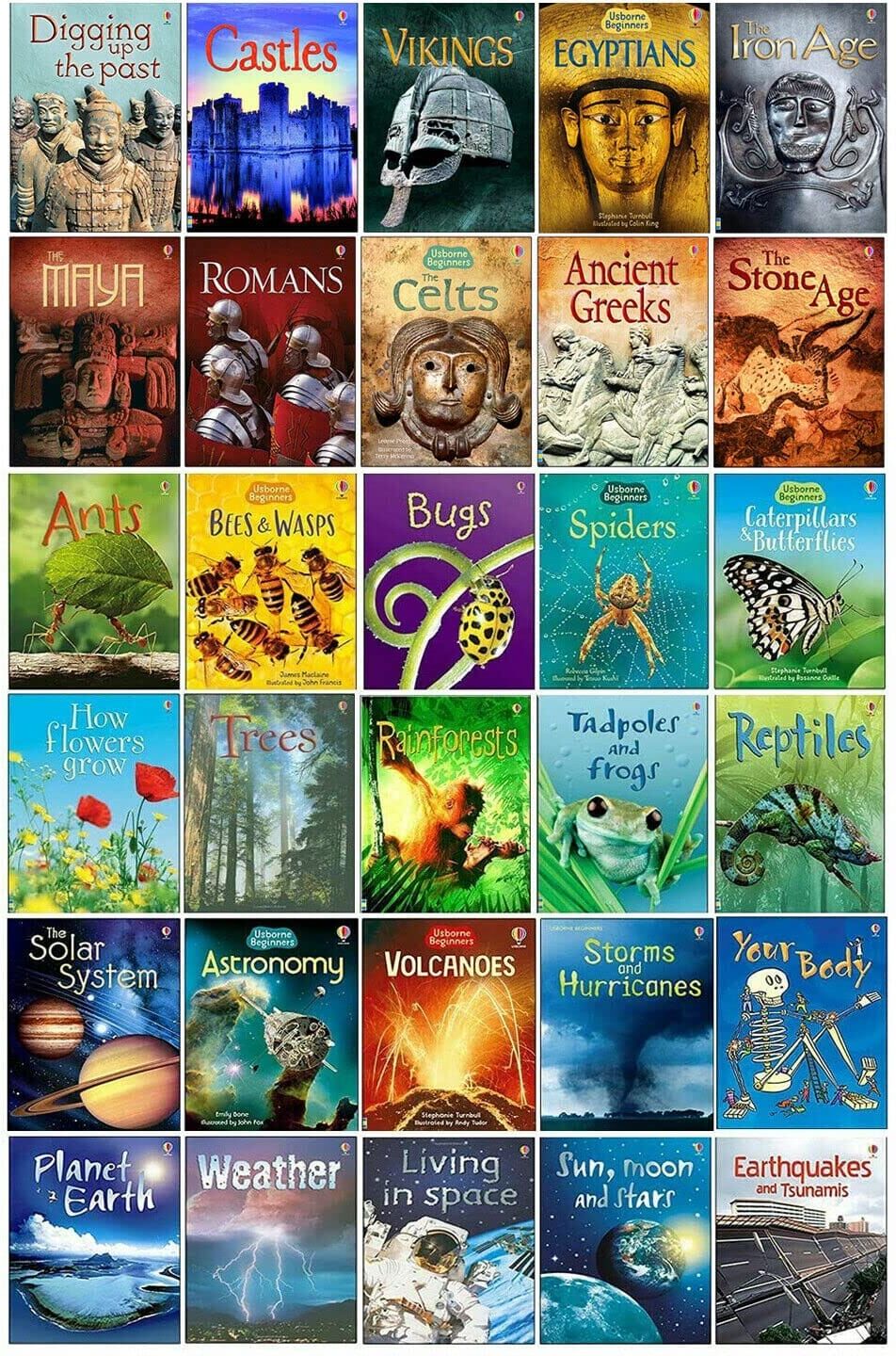
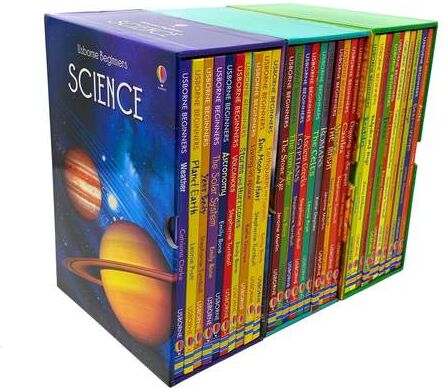
Usborne Beginners Nature, Science & History Collection 30 Books Set - Ages 4-10 - Paperback Usborne Publishing LtdTitles in This Set: Usborne Beginners Nature 10 Books: 1. Ants 2. Bees & Wasps 3. Bugs 4. Spiders 5. Tadpoles and Frogs 6. Caterpillars and Butterflies 7. How Flowers Grow 8. Trees 9. Rainforest 10. Reptiles Usborne Beginners Science 10 Books: 1. Earthquakes & Tsunamis 2. Sun Moon and Stars 3. Living in Space 4. Storms and Hurricanes 5. Volcanoes 6. Astronomy 7. The Solar System 8. Your Body 9. Planet Earth 10. Weather Usborne Beginners History 10 Books: Titles in This Set: 1. Ancient Greeks 2. Castles 3. Celts 4. Digging Up the Past 5. Egyptians 6. Iron Age 7. Maya 8. Romans 9. Stone Age 10. Vikings Description : Usborne Beginners Nature 10 Books Ants Where do ants live? What do they eat? How much weight can they carry? Little children can find out the answers to these questions and much more in this simple introduction to the world of ants. Bees & Wasps What do bees and wasps eat? What type of nests do they make? How do bees make honey? Find out the answers and lots more in this intriguing introduction to the fascinating world of bees and wasps. Bugs ''There are all kinds of different bugs. Some can jump up high. Other bugs have lots of legs.” Bugs is part of an exciting reading series for young children, with lots of pictures and very simple text. Spiders “Spiders have eight legs. Most of them have eight eyes, but some of them can’t see very well.” Learn all about spiders in this great book for children learning to read by themselves. Tadpoles and Frogs From egg to frog, find out about the entire life cycle of a frog in this easy-to-read fully illustrated book for young learners ages 4+. It comes complete with weblinks so you can see the process for yourself. Caterpillars and Butterflies A beautifully illustrated introduction to the life of butterflies and caterpillars, with easy to read text for beginner readers. The life cycle of a butterfly is shown with stunning photographs and illustrations, and there are links to carefully selected websites with videos that show butterflies emerging from their pupae. How Flowers Grow How do flowers grow in dry deserts? How do animals help to spread seeds? Which flower smells like rotting meat? Find out in this great book for young readers ages four and up. Trees How do trees use their leaves to make food? Why do they grow flowers and fruit? Which animals live inside a tree trunk and build nests in its branches? How can we help to protect trees? This book has all the answers and much more, along with photographs, step-by-step illustrations, simple text and links to websites with video clips and activities. Rainforests Learn all about the rainforest in this fantastic easy-to-read book for children 4+ beginning to strike out on their own. From towering trees to rainforest rivers, this fully-illustrated book also features links to carefully selected websites. Reptiles Learn all about the lizard world in this fully-illustrated guide, the latest in the Usborne Beginners series. From scaly skin to tongue tricks...42,75 £*Shipping: 0,00 £Secure redirect to the provider
-
Usborne Beginners Series – 30 Book Collection Box Set Children’s Educational Books (History, Nature & Science) KS1 KS2Usborne Beginners Series 30 Books Collection Box Set (History- Nature- Science) Build a strong foundation in knowledge and reading with the Usborne Beginners Series – 30 Books Collection Box Set, published by Usborne. This comprehensive educational collection introduces children to a wide range of topics across history, science, and nature, using clear language, engaging illustrations, and structured layouts designed for young learners. Perfectly suited for KS1 and KS2 pupils, these books support both curriculum learning and independent reading. From natural disasters and wildlife to historical events and scientific discoveries, the series encourages curiosity, critical thinking, and a love of learning. Description Titles in this set: History Stone Age Iron Age Egyptians Ancient Greeks Celts Romans The Maya Vikings Castles Digging Up the Past Nature Reptiles Tadpoles and Frogs Rainforest Trees How Flowers Grow Caterpillars and Butterflies Spiders Bugs Bees & Wasps Ants Science Earthquakes & Tsunamis Sun Moon and Stars Living in Space Storms and Hurricanes Volcanoes Astronomy The Solar System Your Body Planet Earth Weather Related Tags: Usborne, Usbourne42,75 £*Shipping: 0,00 £Secure redirect to the provider
-
What is the history of appeasement policy? Thank you.
The appeasement policy was a strategy employed by European powers in the 1930s, particularly by Britain and France, in response to the aggressive actions of Nazi Germany. The policy aimed to avoid conflict and maintain peace by giving in to some of Germany's demands, such as the annexation of Czechoslovakia's Sudetenland. The policy was based on the belief that by appeasing Hitler, further aggression could be prevented. However, this approach ultimately failed as it only emboldened Hitler and led to the outbreak of World War II. The policy of appeasement is now widely criticized for its role in allowing Nazi Germany to expand its power and influence. **
-
What is the difference between regional policy and cohesion policy?
Regional policy focuses on addressing economic disparities and promoting development within specific regions, while cohesion policy aims to reduce disparities and promote harmonious development across all regions within the European Union. Regional policy is more focused on specific geographic areas, while cohesion policy has a broader scope and aims to promote overall economic and social cohesion within the EU. Both policies work together to support sustainable development and reduce inequalities among regions. **
-
What is the difference between domestic policy and foreign policy?
Domestic policy refers to the decisions, laws, and actions that a government takes within its own borders to address issues such as healthcare, education, and the economy. On the other hand, foreign policy involves a government's strategies and actions in dealing with other countries, including diplomacy, trade, and military intervention. While domestic policy focuses on internal matters, foreign policy is concerned with external relations and international affairs. Both types of policy are crucial for a government to effectively govern and represent its interests at home and abroad. **
-
What is the difference between refugee policy and asylum policy?
Refugee policy and asylum policy both deal with the protection and support of individuals fleeing persecution or conflict, but they differ in their scope and focus. Refugee policy typically refers to the laws and regulations governing the admission, resettlement, and rights of individuals recognized as refugees by international or national authorities. Asylum policy, on the other hand, specifically pertains to the process and criteria for granting asylum to individuals who are seeking protection within a particular country's borders. While refugee policy addresses the broader framework for addressing refugee situations, asylum policy focuses on the specific procedures and rights for individuals seeking refuge within a particular country. **
* All prices are inclusive of VAT and, if applicable, plus shipping costs. The offer information is based on the details provided by the respective shop and is updated through automated processes. Real-time updates do not occur, so deviations can occur in individual cases. ** Note: Parts of this content were created by AI.